There are dishes that seem correct in execution, but still end up lackluster. The ingredients are right, the cooking time was respected, the recipe was followed, yet there is a lack of depth. In many cases, what separates ordinary food from a memorable preparation lies in the balance between acidity, sweetness, aroma, and persistence of flavor. And this is the space where Balsamic Vinegar shines.
More than just a salad dressing, it is a flavor-building ingredient. Its presence can enhance simple preparations, create contrast, bring freshness, balance fat, and finish both sweet and savory dishes. When well utilized, it transforms the kitchen routine without requiring complex techniques or long ingredient lists.
In this content, you will understand what characterizes Balsamic Vinegar, how it is produced, in which preparations it makes the most sense, how to combine it with different foods, and why it is worth keeping it always at hand in your daily life.
Understanding the striking flavor of Balsamic Vinegar
Balsamic Vinegar occupies a unique place among daily ingredients because it delivers something that is not always easy to find in a single product: acidity, sweetness, aromatic depth, and a finishing sensation all at once. Its flavor is not just about being strong or intense. What makes it striking is precisely the way these layers combine in a balanced manner, creating a noticeable presence in the dish without necessarily overpowering the other ingredients.
Unlike vinegars with a more direct profile, which act primarily as a source of acidity, balsamic typically offers a broader tasting experience. There is an acidity that awakens the palate, slightly sweet notes, woody or fruity nuances, and a texture that, depending on the product, can feel more coating in the mouth. This combination makes its use go far beyond conventional seasoning.
This is why Balsamic Vinegar is often associated with preparations that require contrast and refinement. It enhances the natural sweetness of roasted vegetables, balances the fat of cheeses and meats, brings brightness to sauces, and creates an elegant counterpoint in recipes with fruits. It works as an ingredient that reorganizes the reading of the dish, adjusting the flavor in a noticeable way.
Another important point is that its impact does not depend on a large quantity. Small doses are already enough to alter the final perception of the recipe, making balsamic a high-yield and highly versatile ingredient. When well chosen and well used, it can transform simple preparations into more interesting, complex, and memorable combinations.
How Balsamic Vinegar is produced
Speaking about Balsamic Vinegar also requires understanding why it presents such different characteristics from other vinegars. Its identity is directly linked to the raw material used, the way this base is crafted throughout the process, and the time required for flavor, aroma, and texture to develop with more depth.
Historically, balsamic vinegar established itself as a product closely associated with Italian gastronomic tradition, mainly because it is linked to preparations made from grape must. Over time, this reference helped build the image of balsamic as a more sophisticated ingredient, connected to the idea of careful production, flavor concentration, and more refined culinary use. Even when observing the product in contemporary manufacturing contexts, this heritage continues to influence how it is perceived: an ingredient with its own sensory profile.
Objectively, it is possible to say that Balsamic Vinegar is born from a wine base and grape must, elements that help explain both its darker coloring and its richer, rounder flavor. Unlike more neutral or linear vinegars, balsamic tends to start from a naturally more aromatic raw material, which establishes an important difference right from the beginning.
The fundamental steps of its production help to understand this result.
Selection of the base
The quality of the balsamic begins with the choice of raw material. The grape must, combined with wine vinegars in different formulations, offers a base with a natural presence of sugars, aromatic compounds, and acidity. This is the initial structure that allows the product to develop a more complex profile.
Concentration and flavor building
One of the hallmarks of balsamic lies in the concentration of flavor. This characteristic is related to how the base is worked throughout the process, favoring greater sensory density. The result is a dark liquid with greater depth of taste, where the acidity is accompanied by sweeter and more full-bodied notes.
Fermentation and acidification
As with other vinegars, the transformation of the base goes through fermentative processes that convert compounds from the raw material into stable acidity. In the case of balsamic, the challenge lies in achieving this balance without losing the nuances that differentiate it. To do this, in addition to acidifying, it is fundamental to preserve its own sensory identity.
Maturation and integration
Once the acid base is formed, a decisive factor comes into play: time. Maturation contributes to the flavor elements integrating better, rounding off sharp edges and allowing the product to develop more harmony. At this stage, the balsamic stops being solely acidic and begins to present that sensation of depth that makes it so valued in cooking.
When observing the process as a whole, it is easier to understand why Balsamic Vinegar is perceived as an ingredient with personality. Its flavor is born from the sum of raw material, concentration, acid balance, and evolution over time.
The role of aging in the profile of Balsamic Vinegar
Aging is one of the most fascinating topics when talking about Balsamic Vinegar, as it explains why some products present a rounder, more aromatic, and persistent palate. Although often associated only with time, what occurs during this period is a profound transformation in the ingredient's identity.
Generally speaking, time contributes to the integration of flavors. The acidity becomes less aggressive, while the sweet and aromatic notes become more harmonic. Thus, the product gains definition, sensory layers, and a more elaborate taste presence.
It is also worth highlighting the influence of maturation on texture. In more intense balsamics, it is common to notice a more present body, which helps the liquid adhere better to foods and deliver an enveloping finish. This characteristic justifies why it works so well in finishes and sauces where the ingredient needs to stand out.
Furthermore, aging favors the emergence of complex aromatic nuances. Depending on maturation, notes may appear that recall ripe fruits, wood, mild spices, and even a slight caramelized touch. These layers make the gastronomic experience much richer than that of a vinegar focused exclusively on acidifying.
As a gastronomic curiosity, this is one of the reasons why balsamic is typically used in small quantities. When the product presents more concentration and greater aromatic richness, a few drops can already produce an important effect on the dish.
What differentiates Balsamic Vinegar from other vinegars
To use Balsamic Vinegar with more intention in the kitchen, it is important to understand that not all vinegars fulfill the same role. Although they all bring acidity, each type delivers a different sensory experience, directly influencing the final result of the dish.
What changes is not only the raw material, but the intensity, aroma, texture, and how the vinegar interacts with other ingredients.
See how each one behaves:
Balsamic Vinegar
Presents a more complex profile, with balanced acidity, slight sweetness, and greater aromatic depth. Its dark coloring and sensory presence make it go beyond the function of seasoning. It is ideal when the dish requires contrast, finish, and more personality. It works very well in more structured salads, roasted vegetables, meats, cheeses, pastas, risottos, and combinations with fruits.
Apple Cider Vinegar
Has a lighter flavor and milder aroma, with less interference in the overall recipe. It is indicated when seeking freshness and delicacy, without significantly altering the color or profile of the dish. It is usually a good choice for simple salads, raw vegetables, and preparations where the acidity should appear more subtly.
Wine Vinegar
Delivers direct acidity and a drier profile, with less sweetness presence. It is widely used in classic sauces, marinades, and preserves, especially when a more evident and less complex acidity is desired.
White Vinegar
Has a neutral character and is usually associated with more technical uses. In cooking, it appears mainly in preserves or situations where acidity needs to act without significantly interfering with the flavor and appearance of the ingredients.
Balsamic Vinegar and reduction are not the same thing
When exploring the use of Balsamic Vinegar better, a question often arises: is it the same thing as balsamic reduction? The answer is no, although the confusion is quite common.
This happens because the two products have a similar origin, a close appearance in some applications, and are frequently used in the same types of preparation, especially in finishing dishes. Furthermore, recipes and packaging often do not make this distinction clear, reinforcing the idea that they are equivalent.
In practice, however, each has different characteristics and functions in the kitchen.
Aspect | Balsamic Vinegar | Balsamic Reduction |
What it is | Base product, ready for culinary use | Derived preparation, obtained by reduction or a denser formulation |
Texture | Fluid or slightly full-bodied | Thick, viscous, and more adhesive |
Flavor Profile | Balanced between acidity and light sweetness | More concentrated, intense, and often sweeter |
How it is obtained | Produced from grape must and wine vinegars, with maturation | Result of liquid evaporation or addition of thickeners and sugars |
Function in the kitchen | Season, marinate, compose, and finish lightly | Finish with visual impact and greater intensity |
Best uses | Salads, vinaigrettes, pastas, risottos, meats, and vegetables | Grilled meats, cheese boards, fruits, and desserts |
Intensity | More balanced and integrated into the dish | More striking and concentrated |
Visual effect | Natural and discreet | Decorative and more evident |
Precautions in use | Allows greater freedom of application | Should be used in moderation to not overwhelm the dish |
While Balsamic Vinegar offers versatility and balance, the reduction acts as a more specific resource, designed to intensify the flavor and create a more expressive visual finish.
When to use pure Balsamic Vinegar
Pure Balsamic Vinegar is the best choice when seeking balance, lightness, and integration with the dish. Its fluid texture allows it to mix easily with the ingredients, acting without overwhelming the final result.
It works especially well in:
Salads and vinaigrettes, combining with olive oil, mustard, and herbs.
Marinades, contributing to building flavor in a balanced way;
Finishes of hot dishes, such as pastas, risottos, vegetables, and meats;
Preparations with cheeses, fresh vegetables, and fruits, where delicacy is important.
In these cases, balsamic works as a fine-tuning tool, bringing contrast and depth without dominating the other flavors.
When to use a balsamic reduction
Balsamic reduction is indicated when the goal is to intensify flavor and create a striking finish. Its thick texture and higher concentration make it stand out both on the palate and in presentation.
It works best in:
Finishing grilled or roasted meats;
Oven-baked vegetables and caramelized preparations;
Cheese boards, bruschettas, and appetizers;
Fruits and desserts, such as strawberries, figs, and ice creams.
Because it is more intense, it should be used in moderation. Its role is to highlight the dish, not overpower the other elements.
How to use Balsamic Vinegar on a daily basis
The ingredient stands out for transforming simple preparations with few adjustments. It acts by balancing flavors, bringing contrast, and expanding the perception of ingredients without requiring complex techniques.
More balanced salads
Goes beyond basic seasoning. It works as a base for more complete dressings with olive oil, mustard, herbs, and even honey. It pairs especially well with bitter greens, cheeses, fruits, and nuts, helping to integrate flavors and textures.
Meats with more contrast
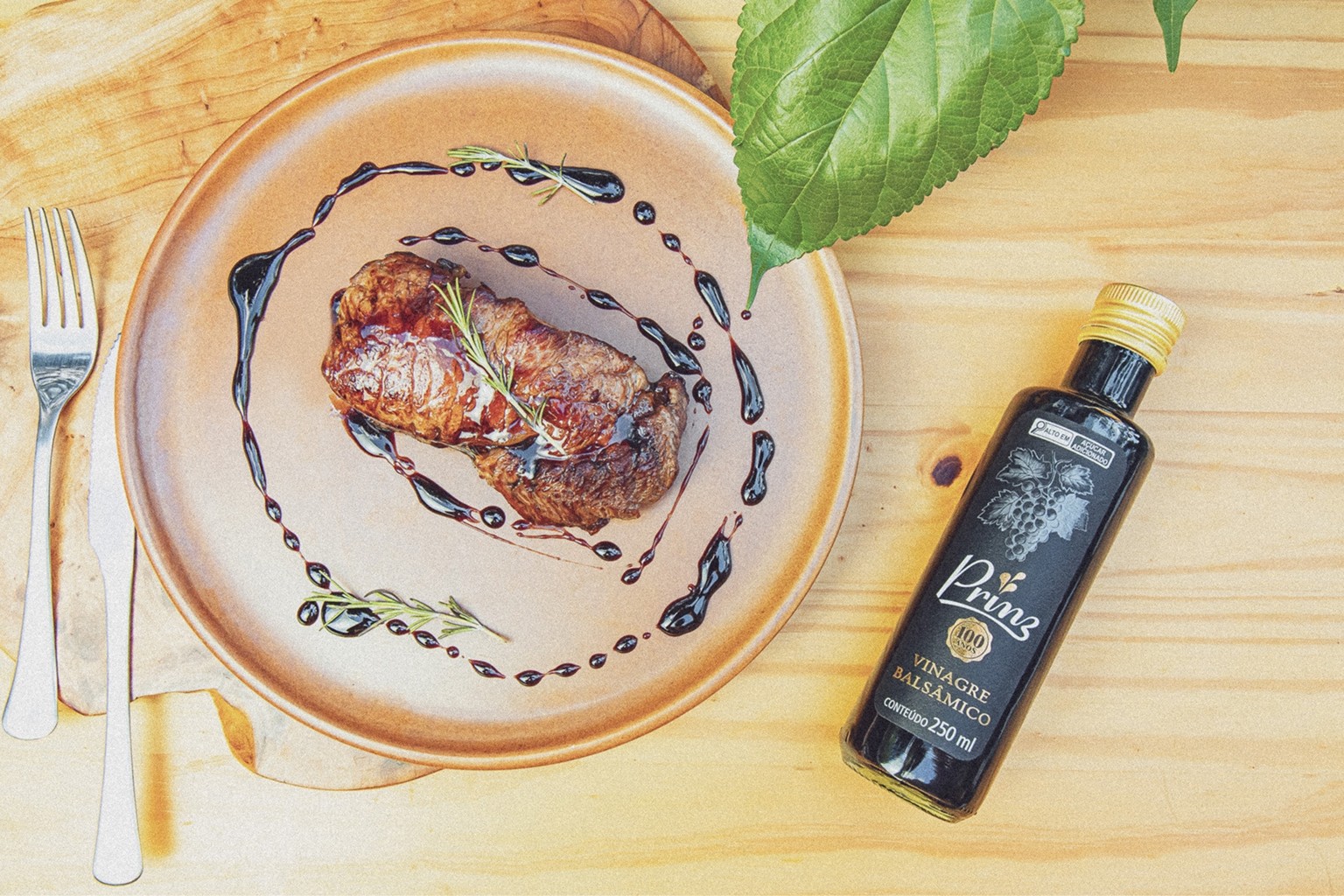
Can be used in marinades or for finishing. In small quantities, it brings brightness and balance, especially to roasted or grilled meats, where it helps offset fat and caramelization.
More interesting roasted vegetables
Oven-baked vegetables gain depth when combined with balsamic. It enhances the natural sweetness of ingredients such as carrots, pumpkin, onions, and tomatoes, creating contrast without being heavy.
More balanced pastas and risottos
In creamy recipes, small quantities help reduce the sensation of heaviness and better highlight flavors. It works well with mushrooms, cheeses, and roasted vegetables.
Appetizers and cheeses
Pairs with cured cheeses, burrata, and breads. It can be used pure or as a reduction, balancing fat and bringing sophistication with little effort.
Fruits and desserts
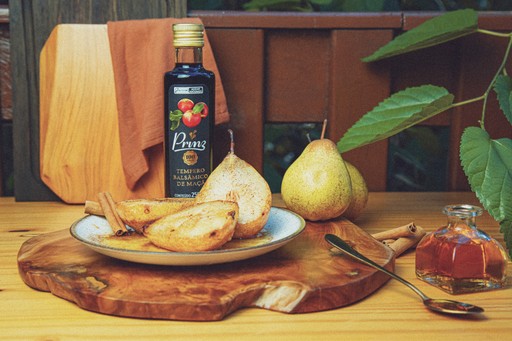
Enhances sweet fruits by creating contrast and defining flavor better. It works well with strawberries, figs, pears, and creamy desserts, avoiding excess sweetness.
How to choose a good Balsamic Vinegar
Choosing a good Balsamic Vinegar requires looking beyond appearance. Since it acts directly on the balance of the dish, some criteria help identify a product that truly delivers results in the kitchen.
Well-defined composition
Products with a clear list of ingredients tend to present a cleaner and more predictable flavor, without artificial interferences.
Flavor balance
The ideal balsamic is neither excessively acidic nor exaggeratedly sweet. The integration between these two characteristics is what allows versatility in use.
More complex aroma
Wine-like and slightly sweet notes indicate a sensorially richer product, which contributes to the dish beyond acidity.
Texture with presence
It does not need to be thick, but it should have enough body to adhere better to foods and not disappear in the recipe.
Versatility of use
A good balsamic works well in different applications, from salads to hot dishes and desserts, without sounding out of place.
Reputation and Tradition
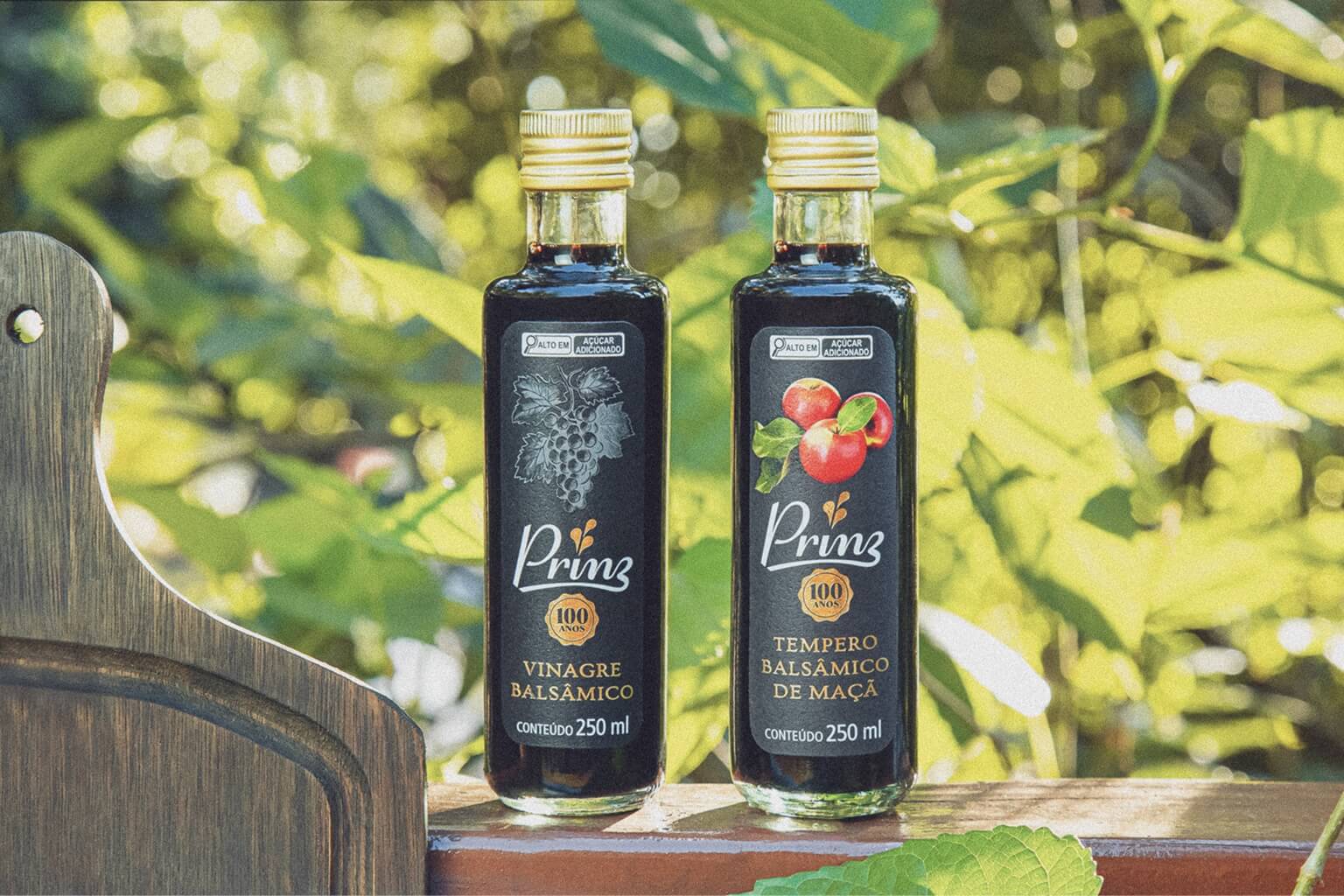
Opting for reliable brands ensures more confidence in the result. Prinz Balsamic Vinegar stands out for delivering balance and adaptation to everyday use.
How to store correctly
Even though it is a stable product, Balsamic Vinegar requires some care to maintain its aroma, flavor, and quality over time.
Suitable environment
Store in a cool, dry place, avoiding excessive heat which can affect the sensory profile.
Protection against light
Constant exposure to light can compromise aroma and flavor. Prefer more protected spots.
Always tightly closed packaging
Reduces contact with air and better preserves aromatic compounds.
Distance from heat sources
Avoid leaving it near the stove or oven, where temperature varies frequently.
Simple storage
It can be kept at room temperature, provided it is well closed and protected from light and heat. Once opened, it is recommended to keep it preferably in the refrigerator to better preserve its characteristics over time.
A simple ingredient that changes everything
Having Balsamic Vinegar at home is a strategic choice for whoever wants to cook better without complicating the routine. Few ingredients can deliver so much with so little: it balances flavors, brings contrast, adds depth, and enhances everything from simple recipes to more elaborate preparations.
Its versatility is what sustains this prominence. It works in salads, meats, vegetables, pastas, cheeses, and even desserts, always with the capacity to transform the final result. Unlike other vinegars, it does not act only on acidity: it builds flavor and contributes to the complete experience of the dish.
When the goal is to give more personality to food, adjust the balance, or move away from the basics with precision, Balsamic Vinegar stands as an essential resource in the kitchen.
Want to raise the level of your recipes daily? Discover Prinz Balsamic Vinegar and find out how small choices make all the difference in flavor.