Not every acidic ingredient acts the same way in the kitchen. In many cases, vinegar is treated merely as a functional resource, a corrective element that adjusts fat, cuts sweetness, or balances salt. But this reading is limited.
In the case of Wine Vinegar, acidity is just the surface of a much more complex construction. Behind it lies a complete sensory system, directly inherited from the wine, involving aroma, structure, persistence, and gustatory memory.
This means that wine vinegar acts integrally on both the acidic taste axis and the overall architecture of flavor. It influences perceived texture, aromatic depth, and even how other ingredients organize themselves on the palate.
In this article, you will discover how this ingredient goes far beyond basic seasoning. We will explore:
The science behind the flavor: how acetic fermentation preserves the soul of the wine.
Red Wine Vinegar: when and why to use its structure and intensity in robust dishes.
White Wine Vinegar: the secret of lightness, precision, and freshness in delicate recipes.
Comparative guide: a practical summary so you never make a mistake in your choice again.
Get to know Wine Vinegar: from fermentation to flavor construction
Wine Vinegar is born from a biochemical process that is simple in its description but sophisticated in its sensory effects: acetic fermentation.
In this process, wine, an already complex matrix of alcohol, organic acids, and aromatic compounds, is exposed to the action of bacteria of the genus Acetobacter, which oxidize ethyl alcohol and transform it into acetic acid.
At first glance, it is a direct conversion: alcohol into acidity. In the process, however, the result is a structural reorganization of the wine's sensory profile.
This happens because Wine Vinegar does not lose its aromatic origin; it preserves part of the compounds responsible for the identity of the base wine, such as:
Phenolics, which contribute to structure and the sensation of body;
Volatile aromatic compounds, linked to fruity and floral notes;
Residual elements from the winemaking process, which influence persistence and complexity.
The result is a hybrid ingredient that simultaneously gathers technical and sensory dimensions, presenting itself as an acidic element that is nevertheless not flat, functional without being neutral, and which acts as an actual conductor of flavor, carrying with it layers of origin, identity, and transformation.
Wine Vinegar cannot be treated as a simple acidulant; it acts as an element for building flavor in multiple layers.
Red Wine Vinegar: structure, intensity, and gastronomic depth
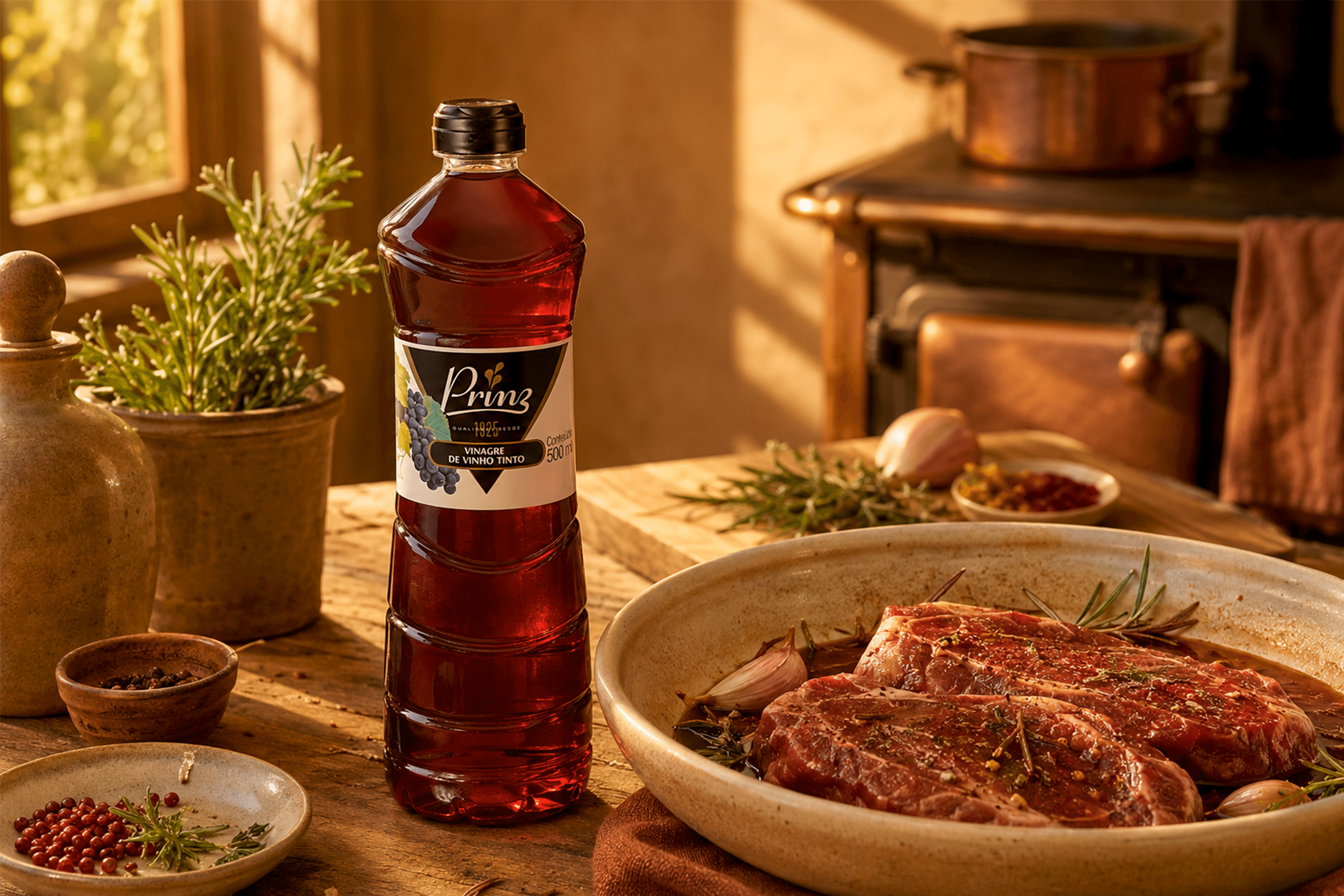
Red Wine Vinegar is the most structured expression within the category. It is born from wine produced with red grapes, such as Cabernet Sauvignon, Merlot, or Syrah, which naturally present a higher concentration of phenolic compounds and tannins.
During acetic fermentation, this structure is reorganized and transforms into a vinegar of greater sensory presence. The result is an ingredient that acts not only through acidity, but through the construction of body.
On the palate, Red Wine Vinegar presents an enveloping acidity, mild astringency, and a more full-bodied sensation. Its aroma tends to recall ripe red fruits, with greater aromatic persistence and a more prolonged gustatory impact.
→ How to use Red Wine Vinegar in the kitchen
Red Wine Vinegar works best in preparations where there is intensity and structure, as it is a base and support ingredient.
Examples of use:
Red meats and marinades: helps tenderize fibers and adds depth to the flavor;
Rich sauces and reductions: integrates the background flavor and reinforces structure;
Long-cooking dishes: such as ragus, stews, and preparations rich in collagen;
Legumes: beans, lentils, and chickpeas gain contrast and complexity;
Rustic preparations and grilled dishes: where the goal is intensity and not softness.
Generally speaking, it acts as an element of sensory weight, helping to support denser flavors and balance fattier preparations.
White Wine Vinegar: lightness, precision, and aromatic freshness
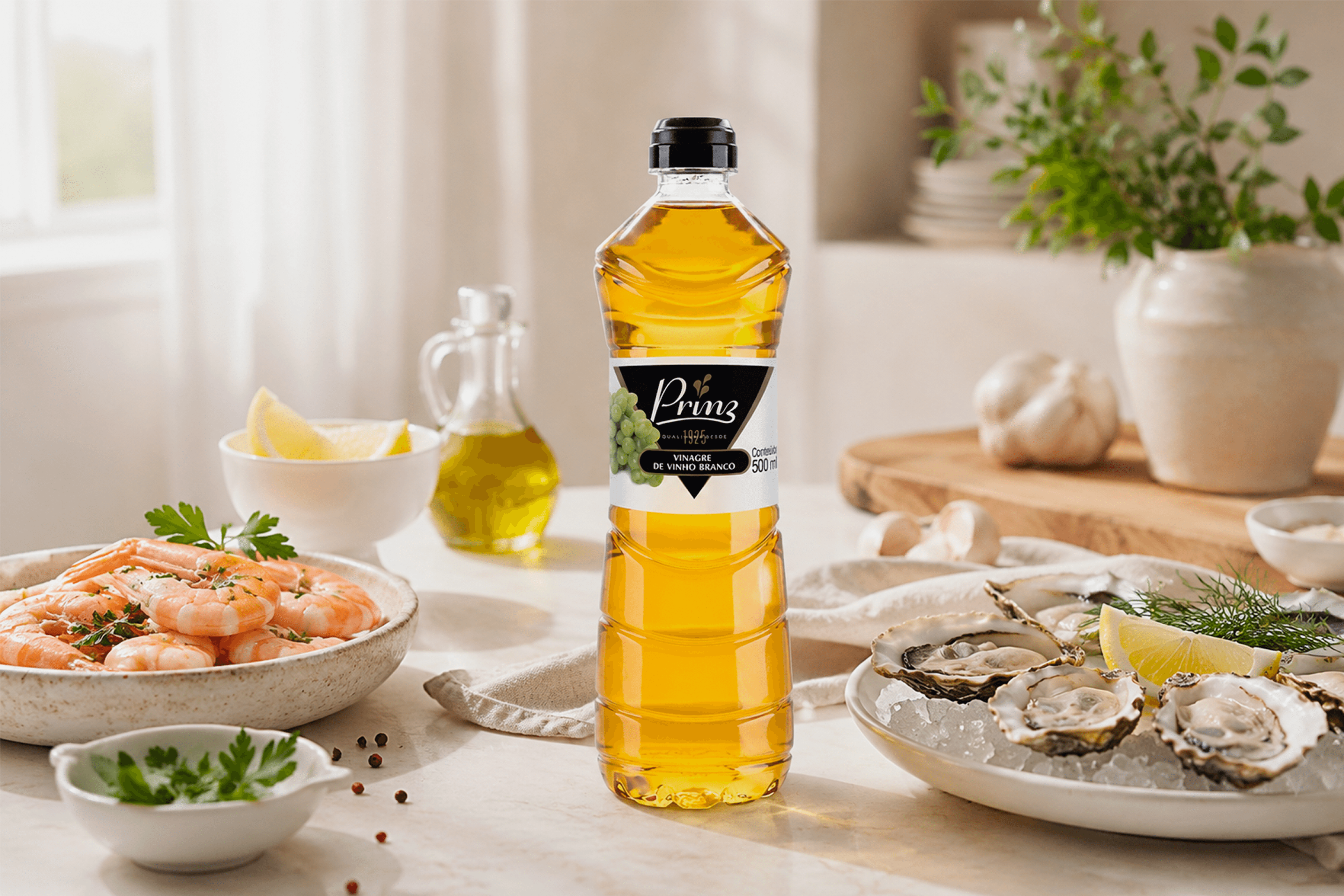
White Wine Vinegar is born from wines made with grapes of a more delicate profile, such as Chardonnay or other varieties focused on freshness and cleaner natural acidity.
Here, the sensory logic changes completely: the focus is not on depth, but on definition. During fermentation, the transformation of alcohol into acetic acid occurs in the same way, but the resulting aromatic base is lighter, more transparent, and less dominant.
This makes White Wine Vinegar have a more direct acidity, with less interference with the flavor of the main ingredients.
Its sensory profile is delicate, with subtle fruity notes and perceptible freshness. In addition, its light coloring preserves the aesthetics of the dishes, which is especially important in more refined preparations.
How to use White Wine Vinegar in the kitchen
White Wine Vinegar acts as a precision adjustment. It does not overpower ingredients, but rather organizes and brightens the whole.
Examples of use:
Fish and seafood: enhances freshness without masking delicacy;
Light sauces and emulsions: such as beurre blanc and butter-based preparations;
Fresh salads: especially green leaves and light combinations;
Delicate preserves: such as cucumber, red onion, and light vegetables;
Mild vinaigrettes: where the acidity must balance without dominating.
It functions as a fine tuning of the recipe: correcting balance without altering the dish's identity.

Red Wine Vinegar vs White Wine Vinegar
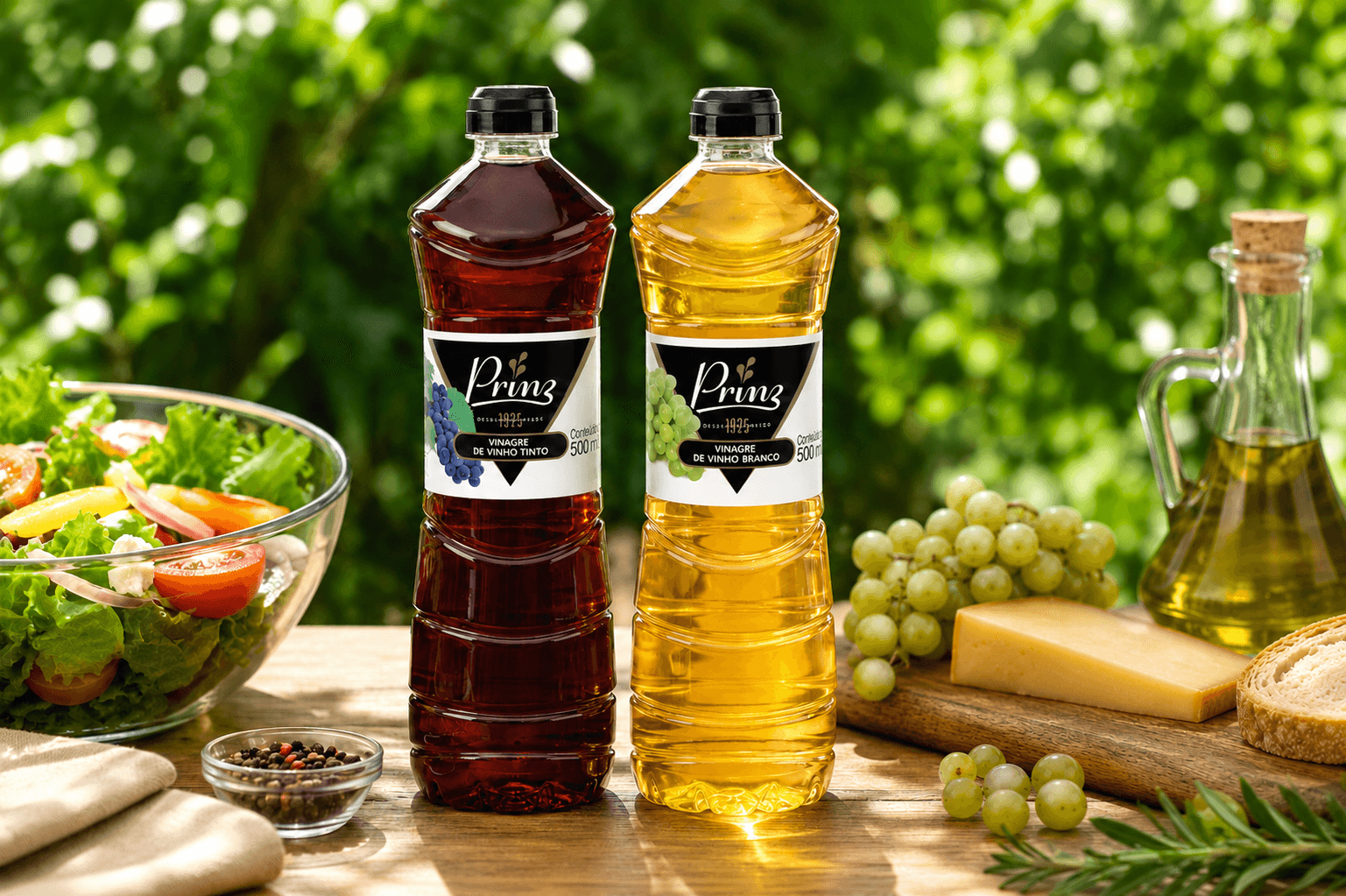
Despite sharing the same principle of origin, Red Wine Vinegar and White Wine Vinegar exhibit essentially different gastronomic behaviors. The main distinction lies in the role each plays within the structure of the dish.
Red Wine Vinegar works with depth, body, and presence. It builds a base, supports intense flavors, and adds sensory density.
White Wine Vinegar, on the other hand, works with lightness, precision, and definition. It organizes the flavor, preserves the delicacy of the ingredients, and maintains the gustatory cleanliness of the preparation.
This difference gives each of them complementary roles in the kitchen, not competitive, but functional.

Comparison between Red and White Wine Vinegar
Aspect | Red Wine Vinegar | White Wine Vinegar |
Base | Red wines (Cabernet, Merlot, Syrah) | White wines (Chardonnay and similar) |
Structure | Full-bodied, with greater sensory presence | Light and more transparent |
Acidity | Enveloping and persistent | Direct and clean |
Aroma | Ripe red fruits and dense notes | Light and delicate fruitiness |
Color | Ruby or reddish | Transparent and light golden |
Culinary function | Flavor construction and structural base | Balance adjustment and finishing |
Impact on dish | Adds depth and weight | Maintains lightness and highlights ingredients |
Ideal applications | Meats, rich sauces, legumes, long-cooking dishes | Fish, salads, light sauces, delicate preserves |
Final sensation | Intense and persistent | Fresh and refined |
This comparison reveals something fundamental in gastronomy: adequacy of function.
The two products operate under different, almost complementary, sensory logics. One works with density, presence, and supporting more robust flavors. The other operates with precision, lightness, and aromatic definition.
In daily practice, this shows that the choice between them must be guided by the structure of the dish being built. When this choice is made consciously, vinegar stops being a mere seasoning detail and becomes a tool of sensory direction, capable of altering balance, fat perception, freshness perception, and even the pace of tasting.
The importance of consistency in culinary use
In a structured kitchen, whether domestic, advanced, or professional, the repeatability of results is as important as the creation of new recipes. Thus, ingredient consistency acts as a secondary attribute and, above all, as a technical requirement.
In the case of Wine Vinegar, slight variations in acidity, aroma, or intensity can significantly alter the final balance of a preparation. This is especially critical in recipes that depend on precision, such as emulsions, reductions, or mother sauces.
When the sensory profile of the vinegar is stable, the cook works with predictability. In this way, it is possible to adjust proportions with confidence, replicate results faithfully, and develop recipes in a controlled manner.
In other words, consistency is a characteristic of quality and a condition of culinary reliability.
Wine Vinegar as a language of flavor
Wine Vinegar should not be interpreted merely as an ingredient. It can be understood as a language within gastronomy, which organizes relationships between fat, acidity, sweetness, and aromatic intensity.
In well-constructed dishes, it stands as an ingredient with connective strength, sewing structures together, adjusting contrasts, and defining how the palate perceives continuity between flavors.
When used with technique and intention, Wine Vinegar elevates the status of seasoning to a sensory steering tool with the power to alter the reading of a dish without changing its essence.
Explore the different profiles, experiment with combinations, and discover how small choices can completely change the experience at the table.