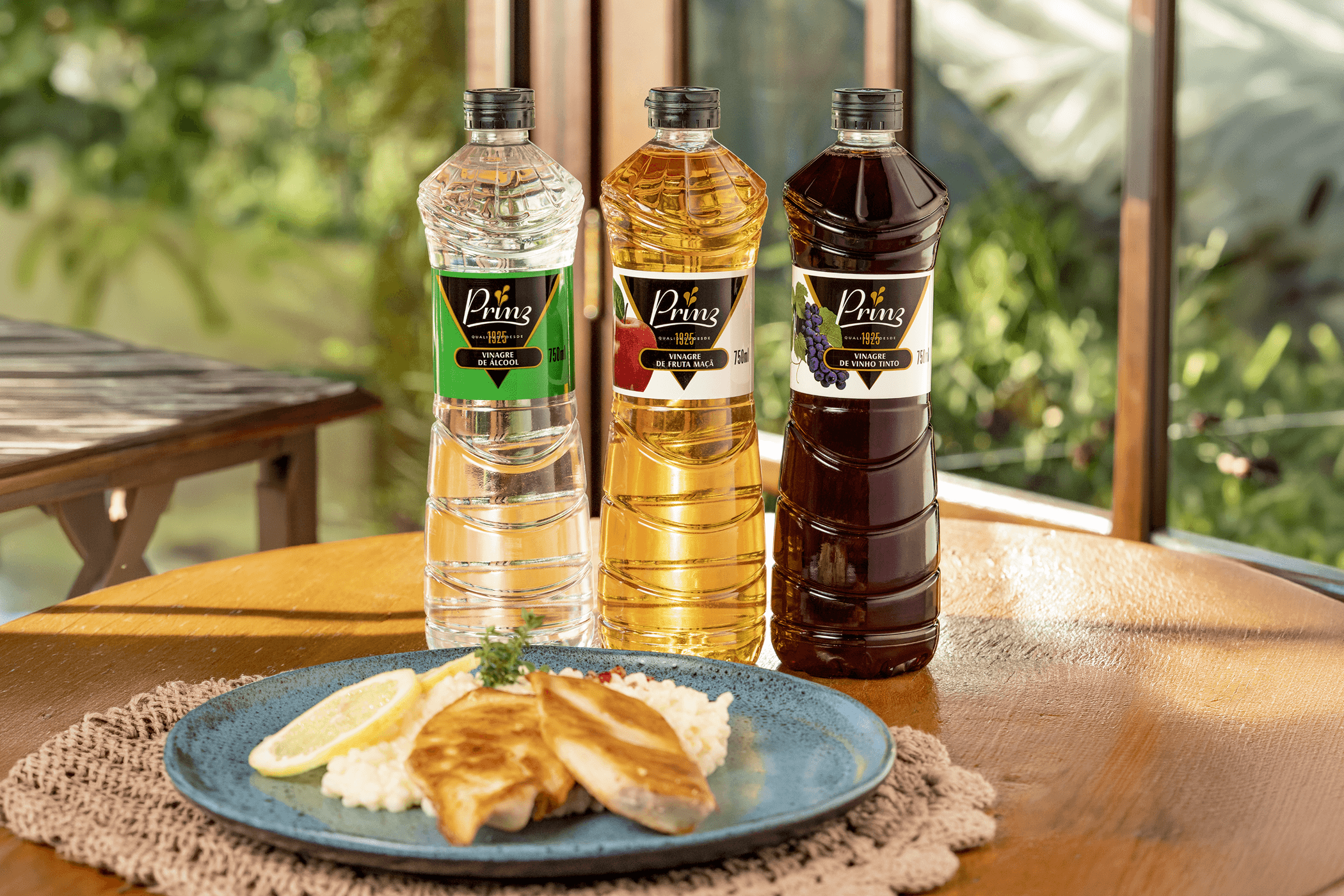
Choosing a vinegar distributor determines more than supply. It affects margin, predictability, and operational continuity. In businesses that depend on a steady flow, a mistake in this decision shows up in costs and can be translated into stockouts, lost sales, and operational instability.
What is at stake in this decision:
Direct impact on margin;
Supply predictability;
Operational stability;
Reduction of hidden losses.
In wholesale, retail, and food service, this decision cannot be treated as a simple comparison of price per liter, because it involves technical variables that influence everything from product standardization to stock stability.
Vinegar is present in multiple layers of the consumer chain. It is part of household routines, is integrated into industrial processes, and is essential for food service operations that require consistency and repeatability. This broad range of uses turns the product into a sensitive input, whose absence or variation directly affects the operation.
When the supplier cannot guarantee consistency, the impact is not limited to the product shortage. It shows up in stockouts, loss of recurring sales, logistical disorganization, and, in many cases, a negative perception from the end consumer. On the other hand, when the choice is well structured, supply stops being a risk and starts to act as a support element for growth.
Impact on business performance
An operation's performance is directly linked to the reliability of its inputs. In the case of vinegar, this relationship becomes even more important because of its constant presence and the diversity of applications. When supply fails, the impacts spread across different levels of the operation.
Where the problem appears:
In retail
• Reduced category turnover;
• Increased shelf stockouts;
• Lower average ticket value;
• Loss of consumer loyalty.
In food service
• Changes in recipe standards;
• Need for improvised substitutions;
• Loss of consistency in the menu;
• Direct impact on customer experience.
In industry
• Variations in acidity control;
• Compromise of entire batches;
• Rework and increased waste;
• Financial and operational losses.
A recurring example occurs in restaurants that use wine vinegar in sauces. Replacing it with a product with a different sensory profile requires adjustments and can compromise the final result.
The choice of distributor stops being operational and becomes strategic.
Vinegar as a high-frequency input
Vinegar is one of the few inputs that crosses different segments while maintaining a consistent consumption pattern. This high-frequency characteristic requires a more strategic approach to supply planning.
In food retail, the product has continuous turnover, with a considerable increase in consumption during the summer. It is used daily in simple preparations, which ensures frequent and predictable replenishment. In supermarkets, this translates into the need for regular stocking to avoid gaps on the shelf.
In food service operations, consumption occurs in larger volumes and with greater diversity of applications. Restaurants use vinegar in marinades, sauces, cleaning, and finishing dishes. In industrial kitchens, it can also be part of standardized processes, where consistency is essential.
In the food industry, vinegar takes on a technical role. It is part of formulations that require strict acidity control and is used in preserves, sauces, and other processed products. Given this, supply predictability is especially desirable and necessary to maintain the production pace.
Companies that do not treat vinegar as a strategic input tend to face stock imbalance. At times, they accumulate excess volume and tie up capital. At other times, they face stockouts and lost sales. Efficient management depends on the ability to align consumption, stock, and supply continuously.
Logistics distributor or supply partner
The distinction between a logistics distributor and a supply partner lies in the depth of involvement. A purely logistical operation is limited to fulfilling orders. It does not consider consumption history, does not anticipate demand fluctuations, and does not offer support during periods of instability. This model only works in low-complexity scenarios.
A supply partner works in an integrated way with the client's operation. It monitors purchasing behavior, identifies consumption patterns, and organizes supply based on predictability. This approach makes it possible to anticipate demand and reduce risks.
During periods of increased consumption, such as holiday dates in retail or production expansion in industry, this difference becomes clear. While traditional suppliers face product shortages, structured partners maintain flow and avoid interruptions.
This type of relationship contributes to greater stability and allows the client to operate with more security and planning.
Technical standardization and consistency between batches
Vinegar standardization is a critical factor for its application. Acidity control and sensory stability ensure that the product behaves the same way in different contexts.
Preserve production
In preserves, vinegar acts as an acidifying agent. If the acidity level varies, the microbiological balance can be compromised. This can reduce the product's shelf life or, in more critical cases, make consumption unviable.
Gastronomic preparations
Restaurants that use vinegar in sauces and reductions depend on product repeatability. A variation in the sensory profile can alter the final flavor of the dish, affecting the customer experience, meal quality and, consequently, the consistency of the menu.
Food industry
In industry, standardization is even more sensitive. A minimal change in acidity can compromise entire production batches, generating rework, waste, and financial loss.
Consumer perception
In retail, consumers notice flavor changes. When the product does not remain consistent, trust in the brand decreases, affecting repeat purchases.
Distributors with strict technical control ensure stability between batches, reducing risks and ensuring predictability.
If your operation depends on consistency, working with a supplier without technical control is not an option. Talk to our team and learn how to structure your supply with predictability.
The invisible cost of stockouts
Stockouts should not be treated as an isolated event. They are one of the main points of loss in the operation and directly affect revenue, even when they do not appear explicitly in financial indicators.
When vinegar is not available, the sale does not happen at that moment. In high-turnover categories, this means an immediate loss of revenue. However, the impact goes beyond the lost sale.
Consumers tend to replace the product or move to another store. When this behavior is recurring, it reduces loyalty and changes purchasing patterns. Considering retail operations, this can compromise the performance of the entire category.
In addition, stockouts disrupt display planning. Empty spaces on the shelf reduce commercial efficiency and affect the perception of the point of sale.
In food service and industrial operations, the lack of the input can interrupt processes or require inappropriate substitutions, compromising quality and productivity.
The only way to reduce this risk is to work with suppliers that guarantee regularity and predictability in supply.
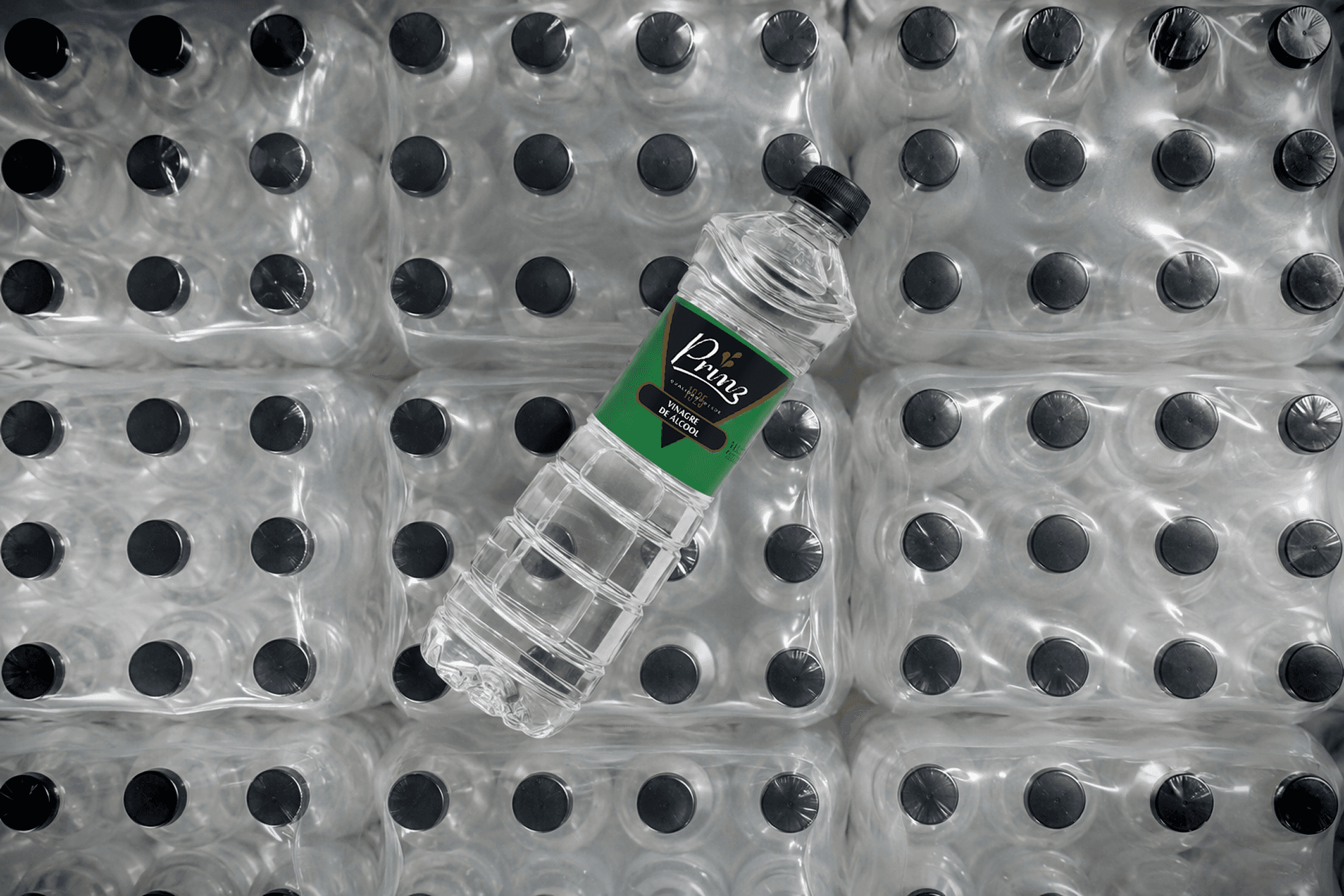
Types of vinegar and market applications
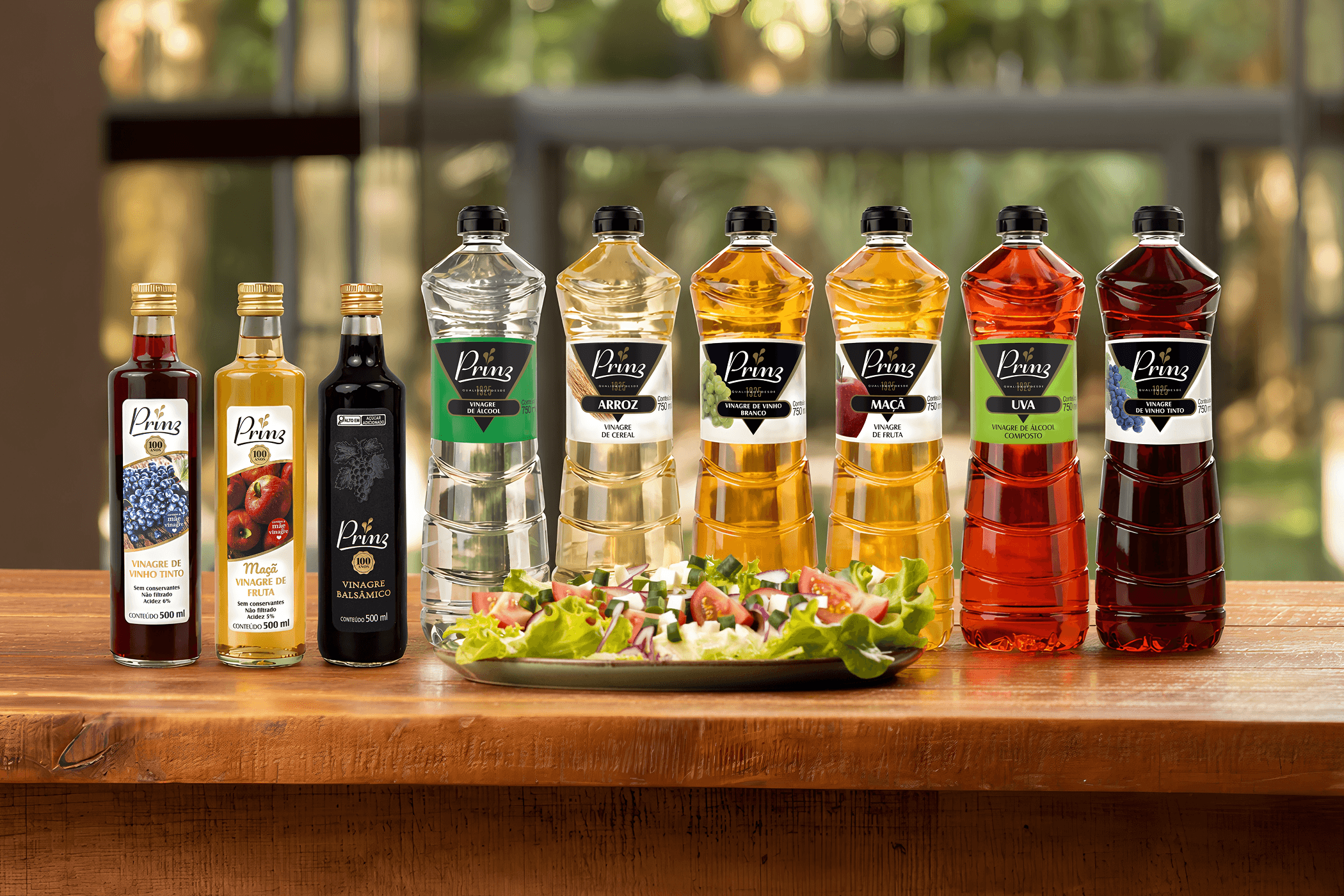
The diversity of vinegar applications requires a broad and technically structured portfolio. Each type meets specific needs and directly influences buying and usage behavior.
Alcohol Vinegar
It has higher turnover and broad application. It is used in preserves, cleaning, and everyday preparation. In industrial kitchens, it offers predictability and competitive cost.
Double Alcohol Vinegar High Acidity
It has higher concentration and yield. Suitable for more intense cleaning and for preserve production that requires greater acidification power.
Traditional Apple Cider Vinegar
Traditional apple cider vinegar is widely associated with direct consumption and a perception of naturalness, reinforcing its positioning within the world of health and wellness, a trend that has gained even more strength in recent years.
Present in lighter and more functional eating routines, it is used in salads, diluted drinks, and everyday preparations, being valued both for its flavor and for its image linked to healthier habits. In retail, it maintains a strong presence precisely because it moves between culinary use and lifestyle, accompanying the growing interest in natural and minimally processed products.
Red or White Wine Vinegars
Geared toward gastronomy, they add sensory complexity to preparations. Red wine vinegar has a more intense profile, ideal for meats and rich sauces, while white wine vinegar is lighter and more balanced, suitable for salads, fish, and delicate preparations.
Balsamic Vinegar
Commonly used as a finishing touch for dishes. Present in operations seeking greater added value and differentiation.
Organic Vinegars
Produced from certified raw materials, they meet specific niches and strengthen the brand's positioning.
Preservative-Free Vinegars
They present less intervention and more natural characteristics, such as slight cloudiness. Valued by consumers who seek less processed products.
Rice Cereal Vinegar
Essential in Asian cuisine. Used in preparing sushi rice and in recipes that require milder acidity.
Compound and Flavored Vinegars
Include versions with lemon, herbs, and other ingredients. They make preparation easier and add value in retail.
Having a complete portfolio makes it possible to serve different consumer profiles, expand commercial reach, and increase the average ticket value. Distributors that offer a structured variety can serve both high-volume operations and specialized niches with greater efficiency.
Packaging, logistics, and delivery frequency
Operational efficiency depends on the integration between packaging, logistics, and delivery frequency. These factors determine the cost per liter, space utilization, and the fluidity of supply.
In retail, smaller packages favor display and increase turnover. In wholesale and food service, larger volumes reduce unit cost and make storage easier.
Logistics needs to keep up with this dynamic. Regular deliveries allow for leaner inventories, reducing tied-up capital and increasing the availability of products with longer shelf life.
When packaging, logistics, and frequency are aligned, the operation gains efficiency, predictability, and better cost control.
How to choose a vinegar distributor and ensure safe supply
The choice of a distributor should be guided by technical and operational criteria. In a chain that requires regularity and standardization, decisions based only on price tend to generate hidden costs over time. Production capacity, quality control, logistics history, portfolio, and commercial flexibility are requirements for sustaining the operation with predictability.
Throughout the chain, vinegar stops being a basic item and becomes a critical input. Its recurring use and diversity of applications mean that any supply failure quickly translates into operational loss.
Operations that do not structure this choice live with stockouts, product variation, and instability.
Structured operations work with control, consistency, and predictability.
The difference is not in the product. It is in the supplier's ability to sustain the operation over time.
If supply fails, the operation pays.
In a scenario where continuity and predictability are essential, any disruption in the supply chain directly affects business performance. That is why Vinagres Prinz has its own fleet to carry out all deliveries, ensuring greater logistics control, regularity, and security in meeting demand.
Talk to the Prinz team and ensure a stable supply for your operation.