
The use of vinegar in cleaning has gained ground in the household routine because it helps remove grease, mineral deposits, and persistent odors on different surfaces. Present in both sanitizing applications and specific culinary uses, it has become associated with a more functional cleaning, especially in environments that accumulate grease, mineral deposits, and persistent odors.
Here at Prinz, we deliver Double Alcohol Vinegar to the market, a product with 8% acidity, practically double what is found in various traditional vinegars. This characteristic provides a more intense action on grease, mineral residues, and other situations requiring a higher acid concentration.
In addition to domestic use, Double Alcohol Vinegar can also be used in preserves, culinary preparations, and other applications that benefit from a higher acid concentration.
In this content, you will understand how acid concentration affects the performance of the product, what differences exist compared to traditional vinegars, where it can be used, and what precautions are important during use.
Understanding why vinegar has gained space in household cleaning
The use of vinegar in household cleaning has become popular mainly due to its practicality and efficiency in tasks involving grease, mineral deposits, persistent odors, and surface sanitization. Products with a higher concentration of acidity have begun to stand out precisely because they show more intense action in different everyday applications.
In the case of Prinz Double Alcohol Vinegar, the 8% acidity makes the product more efficient in applications requiring intense action on certain residues and also in culinary preparations that rely on a higher acid presence.
This higher concentration of acetic acid significantly alters the behavior of the product in daily life. Its action tends to be more effective, especially in situations involving:
Stuck-on grease;
Soap residue;
Mineral stains;
Persistent odors;
Food preservation;
Surface sanitization.
Another important point is to understand that the performance of the product is not only related to the intensity of the acidity. The higher concentration of acetic acid directly influences the behavior of the product in different applications, increasing its capability to act on grease, mineral residues, and persistent odors.
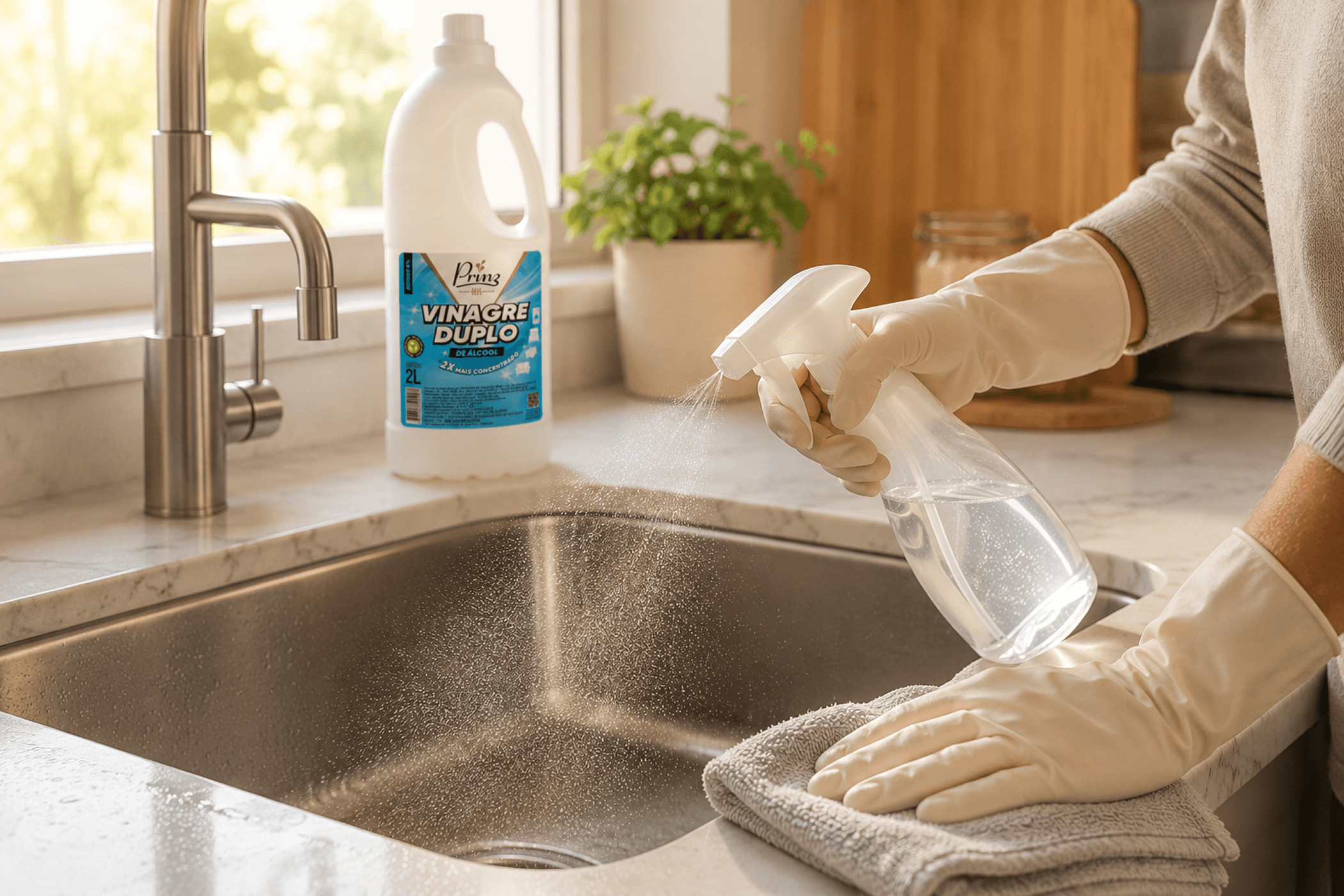
What is the difference between high-acidity vinegar and traditional vinegar?
Although many people associate all vinegars with the same type of application, there are important differences between traditional vinegar and a product with a higher concentration of acetic acid. The main one is precisely the level of acidity.
While many conventional vinegars contain about 4% acidity, Prinz Double Alcohol Vinegar has 8%. This difference directly interferes with the performance of the product in different domestic and culinary uses.
The impact of acidity on household cleaning
Acetic acid has the capacity to interact with greasy and mineral residues present on everyday surfaces. The higher the concentration, the greater the efficiency in applications such as:
Removal of built-up grease;
Loosening mineral deposits;
Cleaning soap scum;
Odor neutralization;
Maintenance of surfaces exposed to moisture.
This explains why higher-acidity vinegars usually show superior performance in heavier household cleaning.
The effect of acidity on preserves and culinary preparations
Acidity concentration also directly influences culinary applications. In preserves, for example, the acidic environment plays an important role in the food preservation process and affects the final flavor of the recipe.
In marinades and sauces, on the other hand, the intensity of the acidity changes:
Sensory profile;
Flavor balance;
Aromatic perception;
Interaction with seasonings and spices.
Because of this, higher-acidity vinegars are commonly used in specific preparations requiring a more intense acidic presence.
Important tip: products with high acidity can present significant differences in composition, acid concentration, standardization, and manufacturing quality. Therefore, before choosing a product, it is worth looking at factors such as percentage of acidity, source, clarity of information on the label, consistency of the formulation, and quality of the production process. These elements directly influence the efficiency, stability, and predictability of daily use.

How to use vinegar in home cleaning
Products with a higher acid concentration can assist in different household routine tasks. Their use extends throughout different contexts of the house and kitchen, making the product functional both in daily maintenance and in heavier cleanings.
Among the main applications are:
Grease removal
Grease is one of the most difficult residues in the household routine because it tends to adhere quickly to surfaces, especially when exposed to heat. Over time, this layer becomes sticky, darkened, and difficult to remove with only water or mild detergents.
The higher acidity of the product helps loosen this accumulated grease, making it easier to clean:
Stoves;
Cooktops;
Range hoods;
Cabinets;
Home appliances;
Wall surfaces near food preparation areas.
This action reduces the need for intense mechanical effort and contributes to more practical daily cleanups.
Removal of mineral deposits
Humid environments constantly accumulate minerals due to frequent contact with water and steam. Over time, this process causes whitish stains, a dull appearance on surfaces, mineral buildup on metals, and persistent marks on glass, especially in areas such as shower screens, faucets, showerheads, and wall finishes exposed to continuous humidity.
Alcohol Vinegar is a natural, ecological, and economical descaler that helps detach residues, especially in:
Shower screens;
Faucets;
Showerheads;
Metal surfaces;
Ceramic tiles.
Frequent use can make the visual maintenance of these areas much easier.
Odor neutralization
The product is also widely used to assist in reducing persistent odors present in fabrics, environments, and surfaces.
Unlike products that merely add intense fragrances, vinegar acts directly on substances related to bad odors.
Its use is very common in:
Cleaning cloths;
Trash cans;
Drains;
Stored fabrics;
Closed spaces;
Surfaces with constant humidity.
Environments with pet odors.
Double Alcohol Vinegar in preserves and culinary applications
In preserves, high acidity contributes to creating an acidic environment traditionally used for preserving vegetables, as well as affecting texture, sensory balance, and flavor intensity. Its use can be seen in preparations with cucumbers, onions, carrots, peppers, and different types of vegetables.
In addition to preserves, the product can also be used in culinary applications that require a more intense acid profile, such as:
Marinades;
Sauces;
Sweet and sour preparations;
Artisanal preservation;
Recipes with a more striking acid presence.
The high acidity provides a more intense flavor and directly influences the aromatic perception and the balance of the ingredients in the preparation.
How to use vinegar in kitchen cleaning
The kitchen concentrates some of the most difficult residues in the household routine. Heated grease, constant steam, and food particles favor the accumulation of dirt on different surfaces.
In this context, vinegar stands out mainly for its practicality and versatility of application.
Stove and cooktop cleaning
During food preparation, grease particles quickly spread and adhere to surfaces. Over time, this accumulation creates a layer that is difficult to remove with just a damp cloth.
Vinegar with 8% acidity helps loosen this grease, facilitating daily cleaning and helping with the visual maintenance of the stove and cooktop.
Cleaning range hoods and grease exhaust systems
Filters and outer areas constantly accumulate suspended grease. When not removed periodically, this residue creates a sticky texture and a darkened appearance.
Using the product helps remove these oily particles and facilitates equipment maintenance.
Microwave cleaning
The steam generated by heating food favors the internal accumulation of grease and dry splatters. A solution heated with water and Double Alcohol Vinegar helps loosen particles stuck to the appliance's inner walls, facilitating sanitation without the need for harsh abrasives.
Sanitizing cutting boards
Frequently used boards absorb intense odors left by ingredients such as garlic, onion, fish, and meats. Using the product helps reduce these odors and contributes to a more efficient sensation of cleanliness on the surface.
How to use vinegar in bathroom cleaning
Bathrooms concentrate constant moisture, mineral residues, and soap buildup, creating a conducive environment for persistent stains and a dull appearance on surfaces. See where the product can be useful:
Cleaning glass shower screens
Frequent contact with water and soap causes the gradual formation of whitish stains on glass. Using vinegar to clean shower screens, therefore, facilitates the removal of these residues and restores the transparency of the material.
Cleaning faucets and metal hardware
Metals constantly accumulate mineral marks due to continuous contact with water. Frequent cleaning helps reduce stains and contributes to the visual maintenance of metallic surfaces.
Cleaning tiles and wall coverings
Soap residues and humidity favor the accumulation of dirt in areas near the shower. Periodical use helps with the daily maintenance of these surfaces.
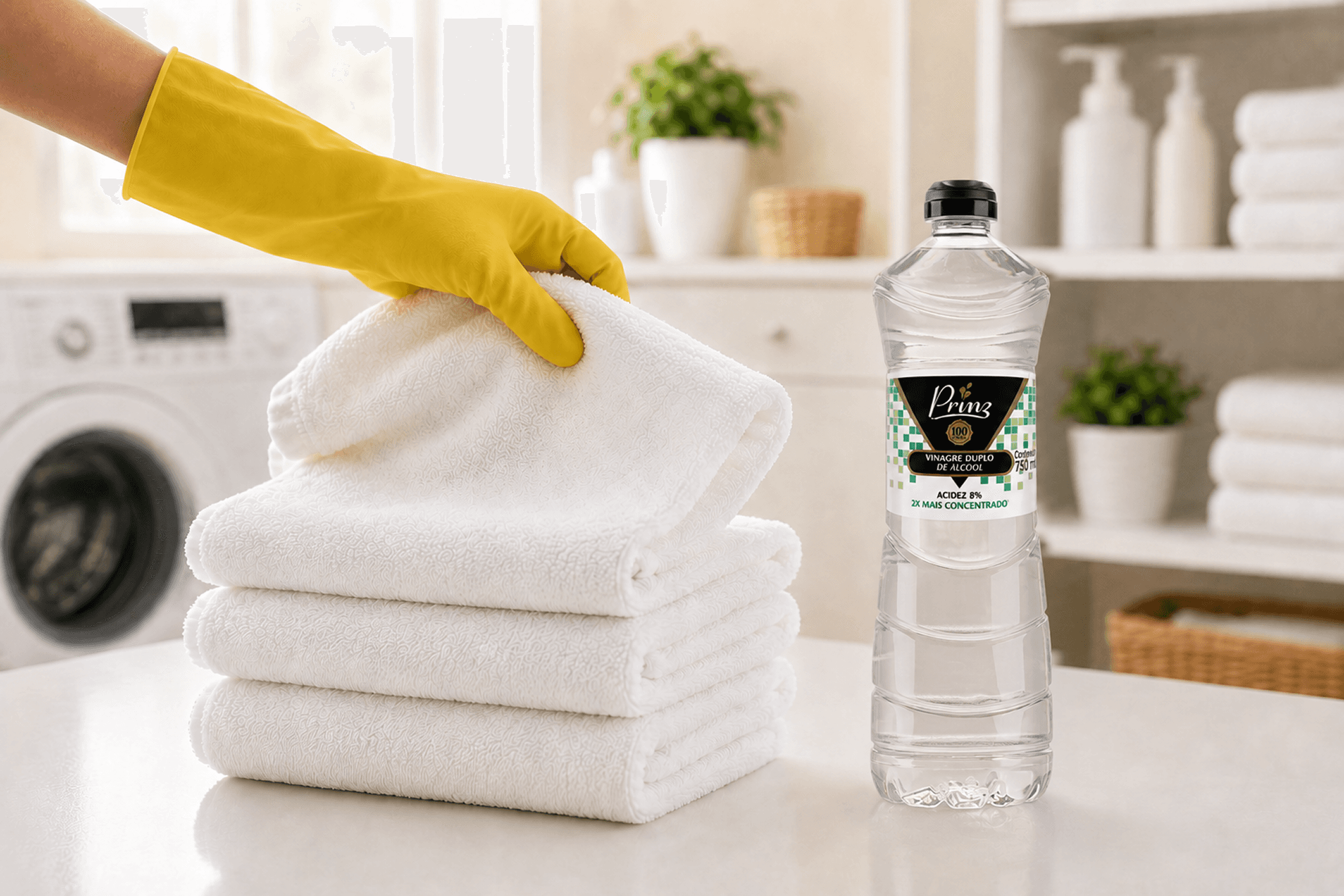
How to use vinegar in laundry cleaning
In the laundry room, the product can assist in different tasks related to fabric maintenance and equipment sanitation.
Assisting in clothes washing
Soap and fabric softener residues can remain embedded in the fibers of fabrics over time.
The use of vinegar, here, can assist in reducing these residues and neutralizing odors present in:
Towels;
Cleaning cloths;
Sportswear;
Stored items.
Reducing odor in fabrics
Musty smells and stored odors are common in fabrics exposed to improper drying. Using the product helps reduce these odors without leaving an excess of artificial fragrance.
Sanitizing the washing machine
Washing machines accumulate soap residues, moisture, and organic particles over time. Periodical cleaning helps maintain the equipment and contributes to reducing internal odors.
Where NOT to use vinegar in cleaning
Despite its versatility, some surfaces can suffer damage due to the acidic action of the product. Knowing these limitations is fundamental to avoid premature wear, changes in finish, and irreversible damage caused by improper use.
Marble, granite, and natural stones
Natural stones have a composition sensitive to acidity. Frequent contact with vinegar during cleaning can cause microscopic corrosion, gradual loss of shine, permanent stains, and wearing of the surface finish.
This precaution is especially important on materials such as marble, granite, travertine, limestone, and other polished mineral surfaces, which can suffer progressive deterioration when repeatedly exposed to acidic products.
Natural wood and waxed surfaces
Acidic action can also compromise varnishes, waxes, and protective finishes applied to wood. Over time, inappropriate use can cause physical wear, alteration of the surface appearance, and loss of the protective layer responsible for conserving the material.
For this reason, vinegar is not recommended for cleaning natural wood furniture, waxed floors, or surfaces with a delicate finish.
Screens, electronics, and sensitive surfaces
Monitors, televisions, notebooks, tablets, and smartphones have extremely delicate layers developed for protection and reflection reduction.
Contact with acidic substances can cause irreversible stains, deterioration of the anti-glare finish, and permanent damage to the screen surface. For electronic equipment, it is ideal to use only products specifically recommended by the manufacturer.
Dangerous mixtures: what to avoid
This is one of the most important points when considering using vinegar for cleaning. Mixing chemical products without technical knowledge can cause dangerous reactions, release toxic gases, and pose serious health risks.
Consequently, some combinations should never be carried out.
Vinegar with bleach: an extremely dangerous mixture
The combination of vinegar and bleach releases chlorine gas, a highly toxic substance for the eyes, skin, and respiratory system. Exposure can cause intense irritation, coughing, shortness of breath, burning eyes, and severe respiratory discomfort.
Because it represents a significant health risk, this mixture must never be made, especially in closed or poorly ventilated spaces.
Vinegar with hydrogen peroxide
This combination can generate peracetic acid, an irritating compound that can cause respiratory discomfort and irritation to the skin and mucous membranes. Even small amounts can pose a risk when handled incorrectly.
Vinegar with baking soda
Although extremely popular in homemade recipes, this mixture generates a temporary effervescent reaction that neutralizes part of the chemical action of both compounds.
It can mechanically assist in localized cleanings, such as physical detachment of residues, but it should not be stored in closed containers due to gas release.
How to choose a high-acidity vinegar and what to look out for
Not all products perform the same. Factors such as acidity concentration, formulation standardization, source, and quality of the production process directly influence efficiency and consistency in daily use.
Additionally, some characteristics help identify products most suitable for different domestic and culinary applications.
What to look out for | Why it makes a difference |
Acidity percentage | Defines the intensity of the product's action |
Clarity of label information | Facilitates correct understanding of applications |
Reliable source | Guarantees greater consistency and safety of use |
Possibility of different uses | Allows domestic and culinary applications |
Formulation standardization | Offers predictability in results |
Ease of use | Contributes to a more practical routine |
Power in grease removal | Assists in more intensive cleaning |
Efficiency against mineral residues | Facilitates maintenance of glass and metals |
Odor neutralizing capability | Assists in prolonged sensation of cleanliness |
Use in preserves | Expands application options |
Products with a higher acid concentration and standardized manufacturing tend to present more consistent behavior in different contexts of use.
Vinegar in cleaning: efficiency in the household routine
Prinz Double Alcohol Vinegar combines high acidity, practicality, and versatility for different daily uses. With 8% acidity, the product can be used in both domestic and culinary applications, including cleaning, preserves, and different preparations.
Its composition brings together intensity of action and practicality in domestic and culinary applications. Whether in cleaning the house, removing stubborn residues, or in specific preparations, the product offers consistent performance in different usage contexts.
Discover our portfolio and find out how products with a higher acid concentration can expand usage possibilities in your domestic and culinary routine.