
As food becomes more demanding regarding quality, traceability, and consistency, vinegar has stopped playing a complementary role and has started to integrate into processes, influence results, and act as a decisive element in both flavor building and food safety. It is in this movement that Prinz Vinegars positions itself as a brand that translates tradition into precision.
It is not just about choosing a vinegar, but about having a solution that delivers stability, process knowledge, and the capacity to meet different forms of usage. Prinz responds to this demand by structuring its production with control and consistency, converting fermentation into a reliable and predictable system.
Throughout this content, you will understand how the brand built its relevance in the market, what its main product lines are, and, most importantly, how to choose the ideal vinegar for each application with greater safety and clarity.
The history of Prinz in the fermented goods market
The history of Prinz Vinegars is directly linked to the tradition of fermentation in southern Brazil, especially in Rio Grande do Sul, where food culture carries a strong European influence. Over a century, the brand has followed important transformations in consumer behavior, adapting its processes without losing its productive essence.
Since its origin, the company has structured itself on a fundamental principle: mastery of the fermentation process. What began as a production guided by tradition has evolved into an industrial model that incorporates strict control of variables such as time, temperature, acidity, and microbiological stability.
Throughout this journey, the evolution of production processes has also incorporated practices aimed at reducing environmental impact, with greater control over the use of resources, energy optimization, and attention to the treatment of waste generated during fermentation. This movement follows a broader shift in the food industry, which aims to integrate production efficiency and environmental responsibility as part of the same process.
This advancement allowed the brand to expand its reach, shifting from a regional context to consolidating a national presence. At the same time, it maintained characteristics that reinforce its identity, such as product consistency and the reliability perceived over generations.
Prinz's permanence in the market for so long is strongly associated with operational continuity and the ability to evolve without compromising quality, keeping pace with changes in the sector with consistency and safety.
Prinz Portfolio: discover the product lines
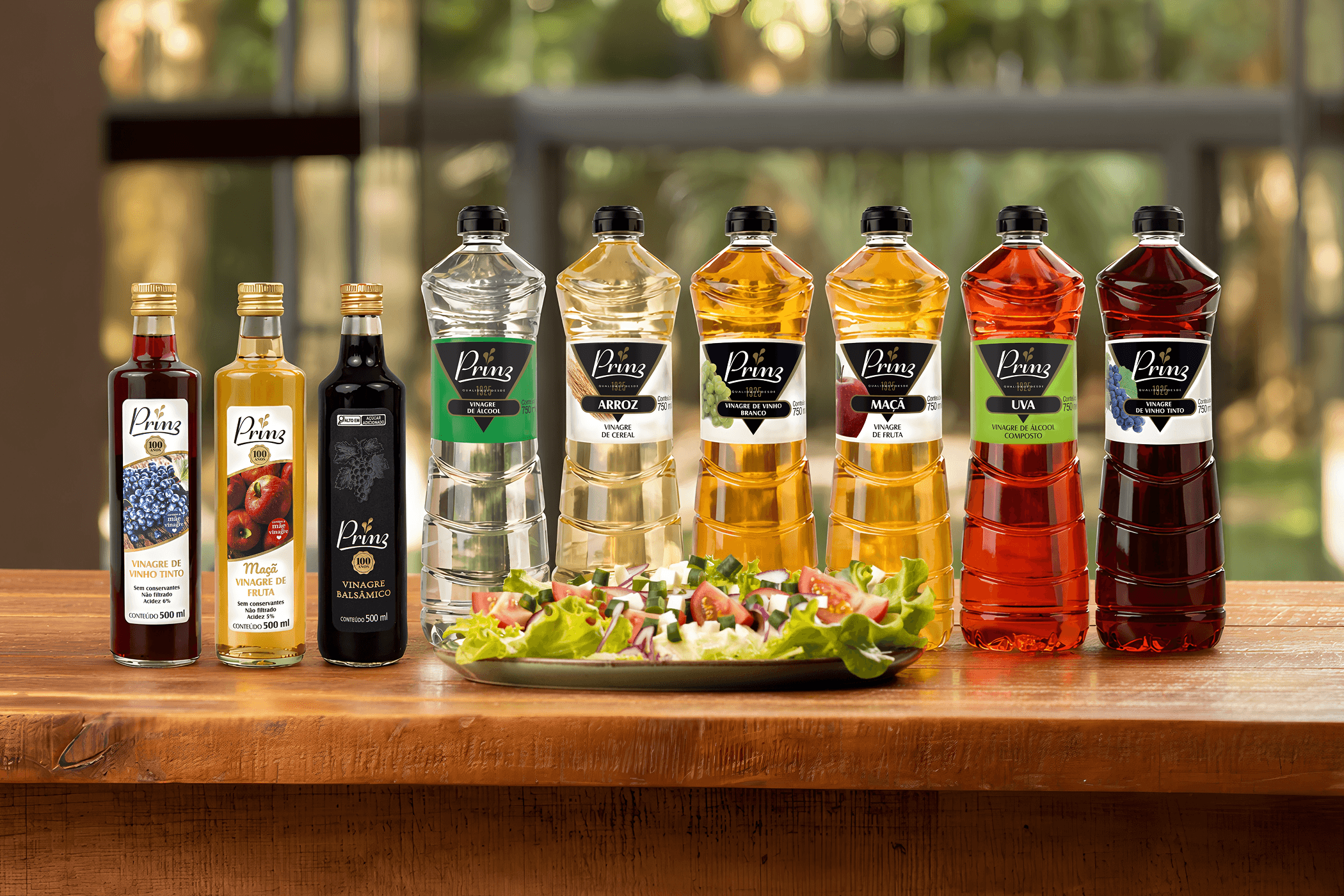
The portfolio of Prinz Vinegars is developed to meet different forms of usage, with variations that consider raw material, acidity intensity, and behavior in application. This organization allows each product to be used in a targeted manner, reducing unwanted interferences and ensuring greater control over the final result.
White Vinegar
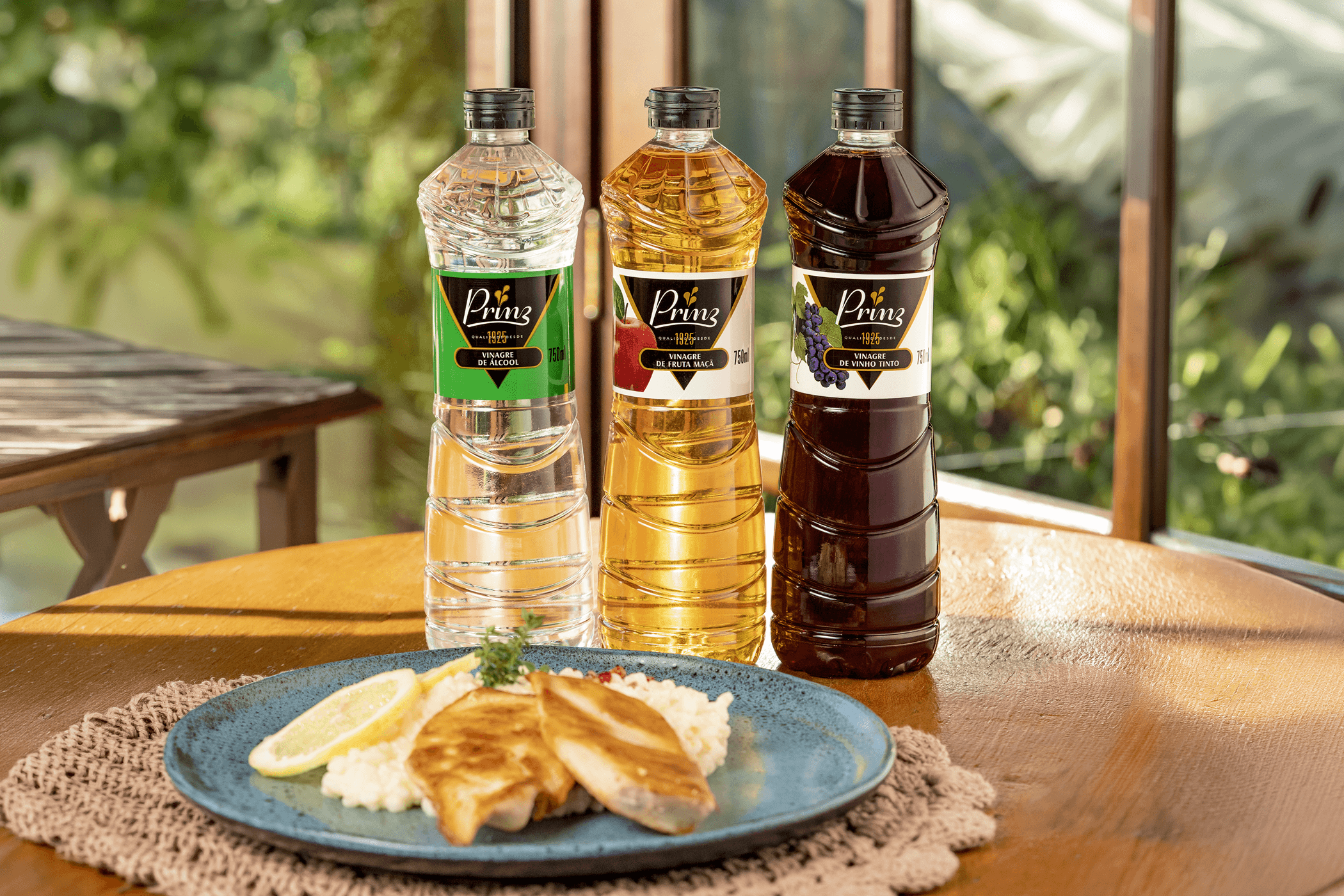
The base for most applications, White Vinegar stands out for its sensory neutrality, transparency, and stability. It is widely used in preserves, brines, and sanitization, as it preserves the original flavor of the food and keeps the solution clear. Its versatility also extends to cleaning, where it acts as a degreaser and odor neutralizer.
Apple Cider Vinegar
With a milder profile and slightly fruity notes, Apple Cider Vinegar is recommended for preparations that require a balance between acidity and palatability. Its use is common in salads, dressings, and combinations that seek lightness without giving up a sensory presence. It also has a growing use associated with the search for more balanced dietary choices, focusing on ingredients perceived as more natural and rich in nutrients.
Wine Vinegars
Wine Vinegars, in red and white versions, present greater aromatic intensity and structure. They are used in marinades, reductions, and more full-bodied sauces, contributing to deeper flavor building. White wine vinegar, in particular, is widely used in preparations with white meats and fish, encouraging more balanced and delicate combinations.
Balsamic Vinegar
Balsamic Vinegar stands out for its more intense profile, with a balance between acidity and sweetness and a denser texture. It is mainly used in finishing dishes, adding contrast and depth to salads, meats, vegetables, and even sweet preparations.
Balsamic Apple Seasoning
Balsamic Apple Seasoning combines acidity and sweetness in a more accessible and versatile formulation. Its application is broad, especially in daily preparations that seek a bittersweet touch without the intensity of traditional balsamic.
Organic Vinegars
Organic Vinegars meet a growing demand for products with controlled origin and more natural processes. They maintain the essential characteristics of vinegar, focusing on purity and traceability. They are available in red wine vinegar, apple fruit vinegar, and balsamic vinegar versions.
Preservative-Free Vinegars
Preservative-Free Vinegars are developed with simpler formulations, without added preservatives or colorants, prioritizing less interventionist processes. They do not undergo complete filtering, which allows the preservation of the mother of vinegar, responsible for the presence of natural turbidity and sediments derived from the raw material.
These characteristics deliver a profile closer to the original state of the product. They maintain functionality and performance in applications, with sensory and visual particularities typical of this category. They also feature distinct acidity, with variations according to the base used, such as 5% for apple cider vinegar and 6% for red wine vinegar.
They are available in red wine vinegar and apple fruit vinegar versions.
Rice Vinegar
Rice Vinegar has balanced acidity and light sweetness, being fundamental in Asian cuisine. It acts directly on the texture and shine of sushi rice, in addition to composing sweet and sour preparations.
Compound Wine Spirit Vinegar with Grape
Compound Wine Spirit Vinegar with Grape combines the neutral base of white vinegar with the addition of natural grape juice, incorporating more aromatic notes into the product. This composition expands the possibilities of use in seasonings and preparations that require slight complexity, without intensely altering the original profile of the dish. It is a versatile alternative for daily applications, maintaining a balance between neutrality and sensory presence.
Lemon Flavored Compound Wine Spirit Vinegar
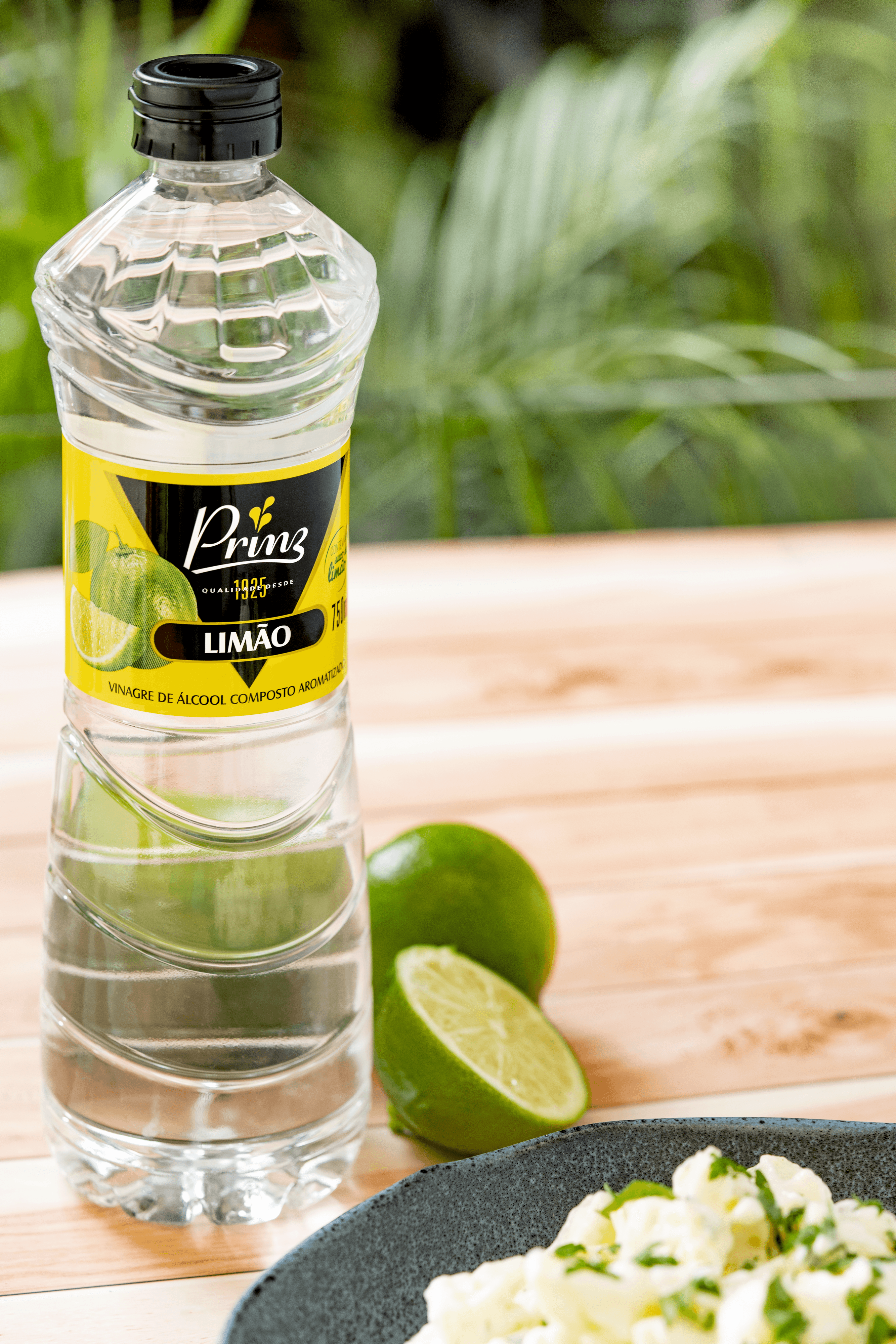
With a more evident citrus profile, Lemon Flavored Compound Wine Spirit Vinegar is recommended for light preparations, quick marinades, and daily use. It provides freshness and sensory prominence in a balanced way, with the addition of natural lemon juice in its composition.
Sushi Rice Seasoning
Sushi Rice Seasoning is formulated to offer an immediate balance between acidity and sweetness, facilitating preparation and ensuring standardization in various dishes of Asian cuisine. It contributes to proper texture and characteristic finish.
Double Strength White Vinegar Acidity 8%
Double Strength White Vinegar Acidity 8% features a higher concentration, being recommended for applications that require more intensity, such as cleaning and processes that demand greater efficiency by volume. It also provides better yield in frequent uses. In addition to these applications, it is an appropriate option for preparing preserves, contributing to greater stability and standardization in processes.
How to choose the Prinz Vinegar for each use
Choosing the appropriate vinegar requires an understanding of the effect it has on preparation. Acidity, raw material, and sensory profile directly influence the texture, flavor, and stability of food.
In preparations involving proteins, such as meats, using wine or apple vinegars contributes to the partial breakdown of fibers. This results in greater tenderness and better absorption of seasonings, especially in longer marinades.
In preserves, the determining factor is microbiological stability. White vinegar, due to its neutrality and well-defined acidity, ensures safety and preserves the original characteristics of the ingredients. This is essential in processes that require strict control, such as pickles and brines.
In dish finishing, the role of vinegar changes. It begins to act as an adjustments element, refining the sensory balance of the preparation. Balsamic vinegar, for example, adds density and depth, contributing to greater flavor complexity without compromising the dish's harmony.
An inappropriate choice can compromise the result, either due to excessive interference in flavor or lack of efficiency in the desired function. Therefore, understanding the behavior of each type of vinegar is what allows the product to be used with greater precision.

Versatility in cooking, cleaning, and functional use
Versatility is one of the most relevant characteristics of Prinz Vinegars. The same fermentative base allows distinct applications, from food preparation to uses related to sanitization and cleaning.
In cooking, vinegar acts as a balancing agent. It adjusts flavors, enhances aromas, and contributes to building more complex dishes. Its presence is not limited to salads. It is in marinades, sauces, reductions, and finishes.
In the context of sanitization, especially of fresh produce, White Vinegar helps in removing residues and impurities. Its application is simple and widely spread, mainly in domestic environments.
In cleaning, the product stands out as a functional alternative. Its degreasing action and ability to neutralize odors make vinegar an efficient resource for kitchen surfaces, utensils, and environments that require constant maintenance.
This wide range of uses reinforces the role of vinegar as a versatile utility, which adapts to different needs without losing efficiency.
Standardization and quality control of Prinz Vinegars
Standardization is one of the pillars supporting the reliability of Prinz Vinegars. The control of acetic acid content is carried out rigorously, ensuring that each batch behaves the same way.
This level of control directly impacts product predictability. In professional kitchens, where repeating recipes is essential, any variation can compromise the result. The stability offered by standardization eliminates this variable.
Another relevant point is microbiological safety. In applications like preserves and industrial processes, acidity needs to be within specific parameters to avoid risks. The control ensures that the product meets these demands.
Furthermore, continuous monitoring of the production process ensures that factors such as purity, transparency, and sensory profile are maintained over time.
Packaging formats and solutions for different demands
The evolution of Prinz Vinegars packaging follows changes in how products are used and distributed. The format is no longer just a means of containment and has started to directly influence usage, resource control, and daily routine organization.
Packaging geared toward daily use prioritizes convenience, facilitating dosing, storage, and handling during frequent preparations. This type of solution contributes to more precise use and avoids excesses, especially in recipes requiring balance in acidity.
On the other hand, larger volume formats meet needs related to yield and continuity of use. They reduce replacement frequency, facilitate inventory management, and allow better utilization over time, especially in environments with recurring consumption.
In lines with a more elaborate profile, the presentation of the product also gains relevance, reflecting care for the content and how it is perceived. In this case, packaging contributes to reinforcing sensory attributes and valuing the user experience, matching the product's proposition.
This development also follows logistical demands, with packaging better suited for transport, storage, and preservation until the moment of use. Reducing losses and distribution efficiency become part of this equation.
In this way, Prinz Vinegars packaging assumes a functional role within the brand's proposition, helping the product maintain its consistency and adapt precisely to different consumption forms.
Tradition, technique, and predictability are the basis of choice
Over 100 years, Prinz Vinegars have built a path marked by consistency and the ability to evolve without losing identity. This continuity is sustained not only by time, but by the constant delivery of quality, stability, and trust in each application.
In Rio Grande do Sul, the brand crosses generations and remains present in food routines and local households. Over time, this presence expanded and became part of consumers' tables throughout Brazil, consolidating a relationship based on familiarity and credibility.
More than just following market transformations, Prinz Vinegars respond to them with precision, maintaining control over what truly matters: performance, quality, standardization, and predictability. Each product reflects this commitment, permitting safer choices and more consistent outcomes.
With a broad portfolio, process mastery, and a consolidated presence, Prinz Vinegars keep up with the market and establish themselves as a benchmark.
Explore the lines of Prinz Vinegars and choose, with confidence, the ideal vinegar for each application.