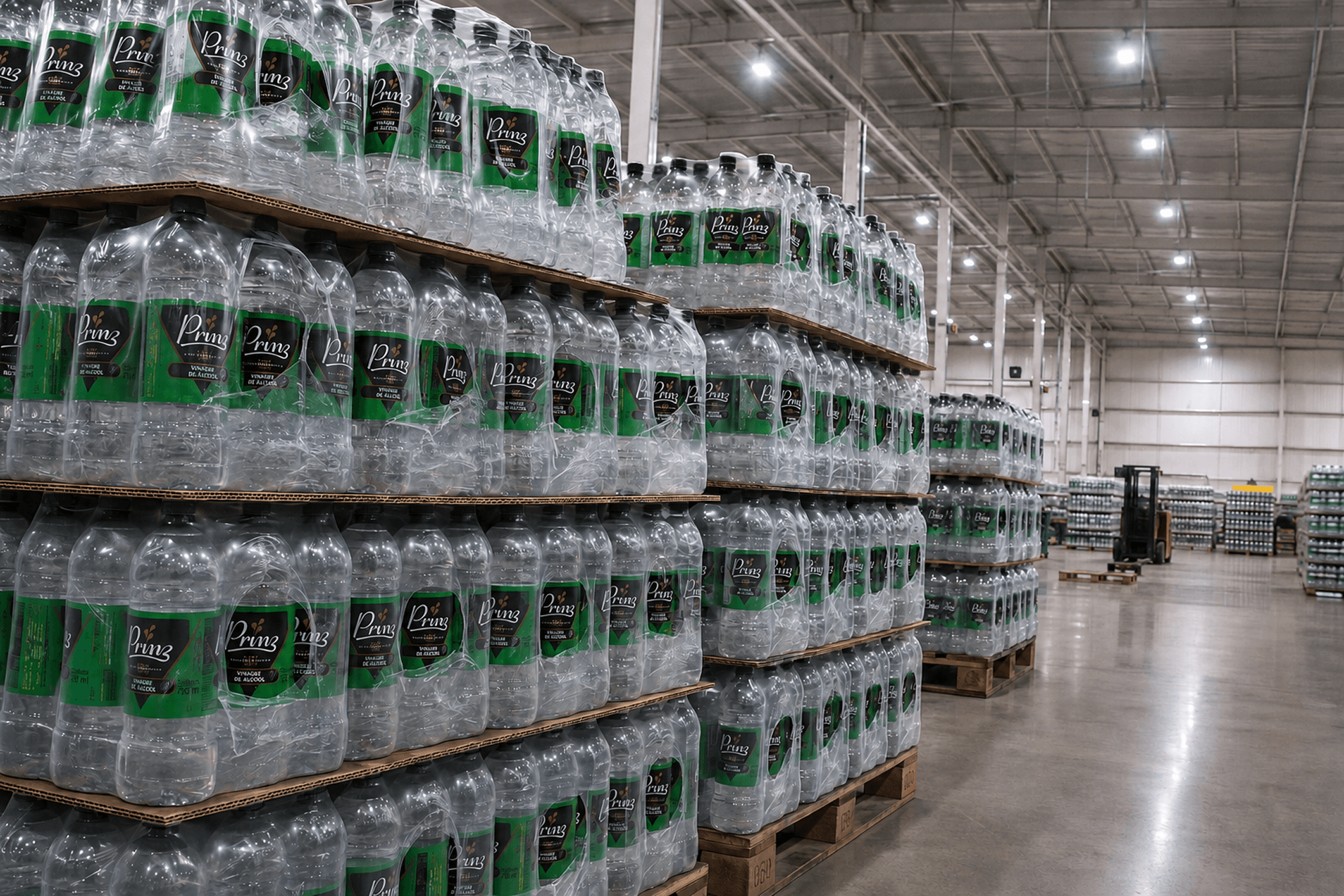
For a long time, purchasing vinegar in large volumes was treated as a simple negotiation, based almost exclusively on price and quantity. However, operations working at scale know that this logic rarely holds up in the long run. In scale operations, supply problems, fluctuations in product standards, and logistical failures usually appear silently, but with a direct impact on the company's routine.
It is common for the difference between an efficient supplier and a problematic one to only become evident after the first recurring deliveries. In many cases, the problem appears in product stability, sensory standards, packaging resistance during transport, or supply irregularity. These are flaws that are rarely visible in the initial negotiation, but that begin to generate operational losses over time.
For this reason, companies operating in distribution, food service, retail, or the food industry have started looking at vinegar differently. The product remains a recurring input, but the supplier takes on a strategic role within the operation.
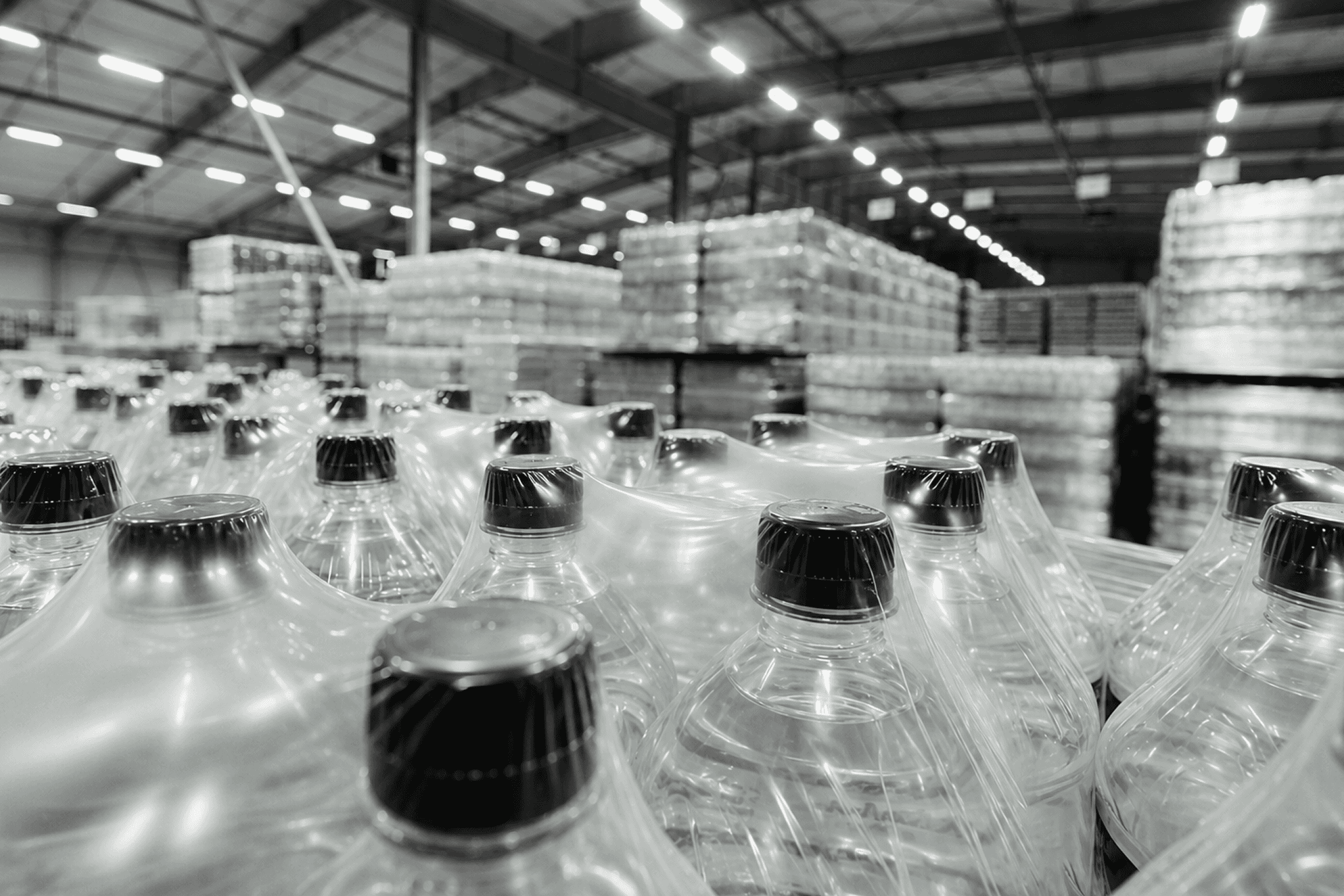
Who buys Wholesale Vinegar?
The Wholesale Vinegar market serves very different segments, each with specific supply, yield, and standardization needs.
Supermarkets and cash & carry stores depend on regularity to maintain constant supply and avoid stockouts on the shelves. Food distributors work with operations that are more sensitive to logistics and need suppliers capable of sustaining volume with predictability.
In food service, the concern is usually linked to product stability. Restaurants, industrial kitchens, and food chains need to maintain flavor, yield, and consistency between preparations, especially in high-demand operations.
On the other hand, the food industry works with even more technical requirements. Manufacturers of preserves, sauces, and processed foods depend on strict acidity control, chemical stability, and standardization between batches to ensure safety and uniformity in production.
There is also a significant demand related to professional cleaning and technical applications, mainly in operations that use vinegars with higher acetic concentration.
Despite the differences between segments, everyone depends on the same thing: continuity of supply and stability in the operational routine.
What changes when buying Wholesale Vinegar?
Buying vinegar at retail and buying Wholesale Vinegar are completely different decisions. In common consumption, the product plays an occasional role. In wholesale, however, it becomes part of a continuous supply chain where product delivery, storage, replenishment, and consistency directly influence the company's operation.
When an operation relies on recurring purchases, any failure begins to create a cascade effect. A delivery delay can compromise production. A stockout can lead to an emergency purchase at a higher cost. An inconsistent batch can change yield, flavor, or technical performance.
That is why larger operations typically prioritize suppliers capable of maintaining stability over time. The problem is not a single isolated error. Operational friction appears when small failures begin to repeat themselves.
In recurring purchases, continuity usually carries more weight than immediate savings.
A low price does not always mean savings
In the Wholesale Vinegar market, small price differences often carry a lot of weight during negotiation, especially in operations that buy in high volumes. The problem is that analysis based solely on the lowest unit value usually ignores costs that appear after the product has already entered the company's daily operational routine.
In many cases, seemingly cheaper suppliers end up forcing the operation to make internal adjustments to compensate for frequent delays, difficulty in replenishment, or lack of consistency in service. Gradually, the operation starts working with larger inventories, emergency purchases, and safety margins that increase the total cost of ownership without this being obvious in the initial negotiation.
There is also a less visible but equally relevant effect: the difficulty of planning the operation safely. Companies that work with more consistent suppliers can organize purchases, adjust stock more accurately, and reduce the need for constant corrections in the operation. Conversely, companies dealing with recurring instability end up wasting more time and resources correcting operational problems that could be avoided with a more consistent supply.
In the long run, a difference of a few cents per unit rarely makes up for the cost generated by a disorganized operation.
The importance of regularity in Wholesale Vinegar supply
Companies that buy Wholesale Vinegar on a recurring basis are usually not just looking for an available supplier, they are looking for continuity. And that significantly changes the logic of the negotiation.
When supply happens regularly, the company can operate with more control over inventory, purchasing schedule, distribution, and demand spikes without needing to reorganize processes with each new order. The supplier ceases to play only a commercial role and directly influences the stability of the operation.
This point gains even more importance in companies that handle seasonality, multiple units, or continuous distribution. In these structures, service capacity matters just as much as product quality.
Therefore, companies working with recurring purchases usually evaluate service capacity, supply history, and logistical structure even before discussing price. Regularity reduces internal friction, improves predictability, and allows the company to operate more securely and with less need for constant adjustments.
Standardization, technical control, and acidity levels
In operations working at scale, standardization is more than an aesthetic or sensory issue. It influences yield, predictability, and operational stability.
When a batch shows variations in aroma, color, or performance compared to the previous one, the entire operational routine must adapt. In restaurants, this interferes with food preparation; in preserves, it can impact product stability and safety. In the industry, recurring adjustments increase rework and reduce efficiency.
Acidity is one of the most important factors in this process. Depending on the application, different concentrations meet specific needs, particularly in segments related to food preservation, sanitization, and professional use.
However, in the wholesale market, the main point is rarely just the acetic concentration. What really matters is stability between batches.
The more consistent the product is between batches, the lesser the need for internal adjustments during the operation.
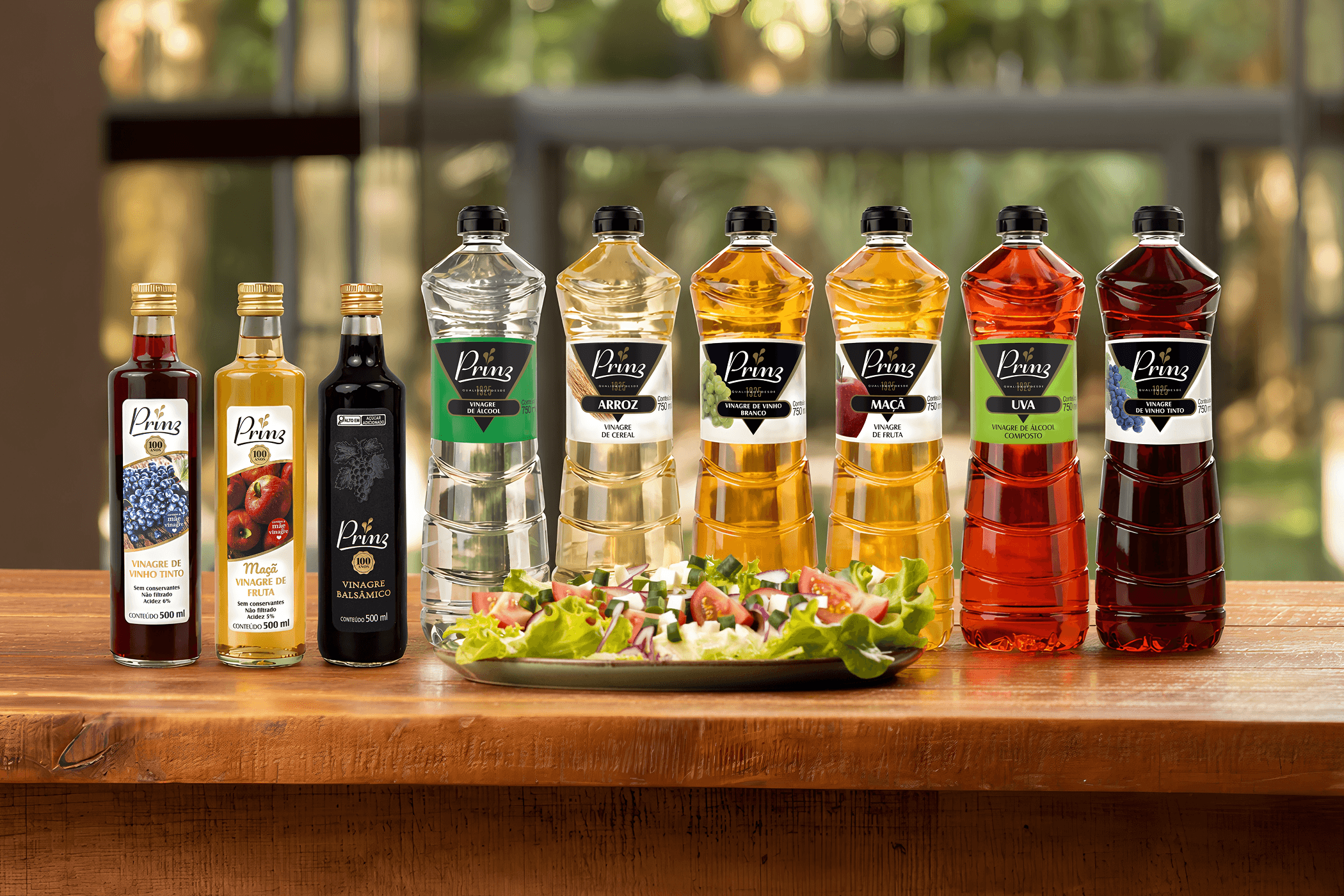
Most commonly used types of Vinegar
Companies working with Wholesale Vinegar typically operate with different product types to meet various demands within the same logistical structure.
White vinegar (alcohol vinegar) remains among the most widely used due to its versatility and high yield in applications like preserves, cleaning, and sanitizing. Apple cider vinegar maintains a strong presence in food retail, primarily in segments related to health and well-being.
On the other hand, wine and rice vinegars usually serve more specific niches in gastronomy and food service, where sensory characteristics and culinary standardization carry more weight.
Type of vinegar | Most common applications | Main characteristics |
White vinegar (Alcohol) | Preserves, cleaning, and sanitizing | High yield and versatility |
Apple cider vinegar | Food retail | Higher added value |
Wine vinegar | Gastronomy and food service | Distinctive sensory profile |
Rice vinegar | Asian cuisine | Culinary standardization |
Many companies prefer to consolidate this mix with suppliers capable of maintaining delivery standards and supply continuity. This reduces logistical fragmentation, improves predictability, and simplifies purchasing management.
Packaging, transportation, and storage also impact the operation
In the Wholesale Vinegar market, packaging should not be analyzed solely by visual presentation. It directly influences transport, storage, handling, and logistical safety.
Fragile or poorly designed packaging increases the risk of leakage, warping during stacking, and losses in transit. In high-volume operations, small recurring damages end up having a significant financial impact.
The way the product is stored also directly interferes with the operational routine. In high-turnover distribution centers, disorganized inventory makes auditing difficult, compromises traceability, and makes handling slower and more prone to error.
Additionally, factors such as space utilization, pallet stability, and ease of handling directly influence overall productivity and operational organization.
These details go unnoticed in smaller purchases but make a significant difference in wholesale.

How to choose Wholesale Vinegar suppliers with more confidence
Choosing suppliers based solely on the lowest price often leads to problems that appear after the deal is closed.
In the wholesale vinegar market, operational stability depends on much broader factors than unit cost. Production capacity, logistical regularity, technical control, batch-to-batch consistency, and regulatory compliance directly influence operational efficiency.
More structured suppliers are better equipped to respond to recurring demands, volume increases, and operations that depend on continuity of supply.
In the end, supplier choice directly impacts inventory, distribution, productivity, and the operation's capability to run without constant interruptions.
Looking for a Wholesale Vinegar supplier prepared to handle recurring operations?
The choice of a supplier impacts much more than just inventory levels. It influences delivery predictability, inventory organization, operational continuity, and the stability of the production routine.
Prinz serves distributors, retail, food service, and industry clients with a complete portfolio of vinegars designed for operations that work with scale, recurrence, and the need for consistency across batches.
With facility structures prepared for different supply demands, Prinz offers solutions focused on supply continuity, logistical efficiency, and sales support aligned with the needs of each operation.
Contact our sales team and learn about Prinz's solutions for Wholesale Vinegar.
FAQ about Wholesale Vinegar
What is the difference between buying retail and wholesale vinegar?
The main difference lies in operational logic. While retail serves an immediate, one-off need, the Wholesale Vinegar market involves recurring supply, delivery predictability, logistical capability, and standardization between batches. In scale operations, the supplier directly influences inventory, distribution, and operational continuity.
Who typically buys Wholesale Vinegar?
The Wholesale Vinegar market serves supermarkets, cash & carry, food distributors, restaurants, industrial kitchens, preserving industries, sauce manufacturers, and professional cleaning companies. Each segment has specific demands related to yield, standardization, and continuous supply.
Is the lowest price the most important factor when buying Wholesale Vinegar?
Not always. In recurring operations, costs related to logistics, storage, damages, emergency purchases, and operational reorganization can have a larger impact than the unit price difference. Therefore, many companies also evaluate supply consistency, logistical structure, and product stability.
Which types of Wholesale Vinegar are in highest demand?
White vinegar (alcohol vinegar) remains among the most widely used due to its versatility in preserves, cleaning, and sanitizing. Apple cider vinegar sees strong demand in food retail, while wine and rice vinegars serve specific segments of gastronomy and food service.
What should I evaluate when choosing a Wholesale Vinegar supplier?
In addition to price, it is important to analyze fulfillment capability, supply history, delivery regularity, batch-to-batch standardization, logistical structure, and technical compliance of products. These factors directly influence operational stability.
Why is standardization important in the Wholesale Vinegar market?
In scale operations, sensory or technical variations can interfere with food prep, preservation, yield, and production organization. For this reason, keeping consistency between batches helps reduce internal adjustments and improves operational predictability.
How does packaging influence Wholesale Vinegar operations?
Packaging directly affects transport, stacking, storage, and inventory movement. Fragile structures increase the risk of leaks, damage, and logistical losses, especially in high-volume handling operations.