Apple Cider Vinegar: learn about its production, how to use it, and why it became popular
Health and Well-being
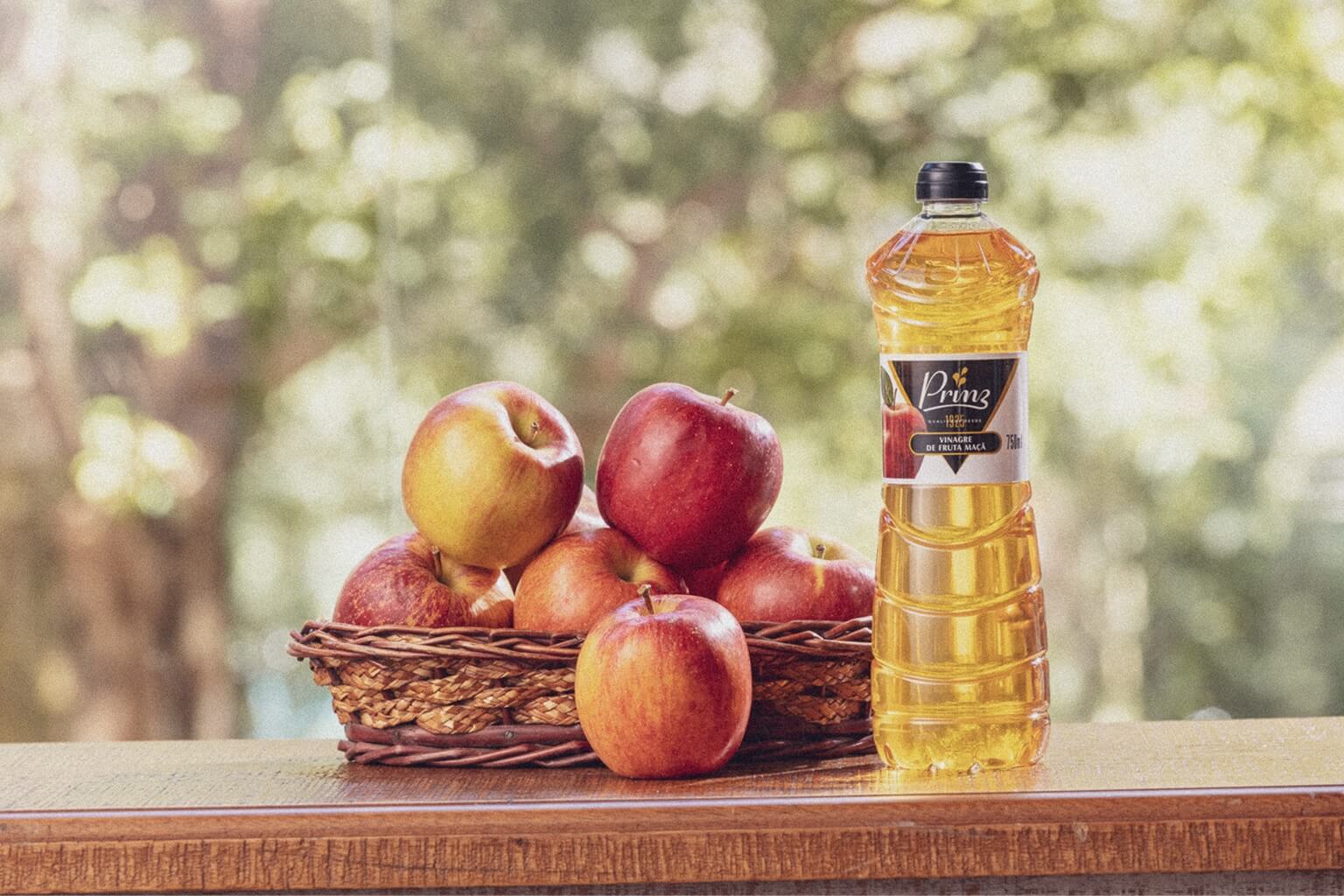
From a specific ingredient, used mainly in salads, Apple Cider Vinegar has become part of broader dietary routines, both in the kitchen and in habits associated with well-being. This shift did not happen by chance. The product combines features such as balanced flavor, less aggressive acidity, and high adaptability to different preparations, which favor its continuous use.
At the same time, the increase in its popularity was accompanied by an excess of superficial and often false information. Therefore, understanding Apple Cider Vinegar from its real aspects is essential to incorporate it into your routine in a conscious way.
Throughout this content, we will show how Apple Cider Vinegar is produced, its sensory profile, product variations, and how to use it in daily life with consistency.
Apple Cider Vinegar: do you know how it is produced?
Vinegar is one of the oldest food products in history. Records indicate its use for more than 5,000 years in civilizations such as the Babylonian and Egyptian, initially as a natural preservative and later as a culinary ingredient and medicinal solution.
In the case of Apple Cider Vinegar, its origin is directly linked to the availability of the fruit in temperate climate regions, where the spontaneous fermentation of apple juice led to the development of the product as we know it today.
From a technical point of view, Apple Cider Vinegar is the result of a two-step biotechnological process:
Alcoholic fermentation: yeasts convert the natural sugars of the apple into ethanol;
Acetic fermentation: bacteria of the genus Acetobacter oxidize the ethanol, transforming it into acetic acid.
Acetic acid is primarily responsible for the acidity, microbiological stability, and functional properties of the vinegar. Besides it, the product may contain compounds such as polyphenols and chlorogenic acid, which contribute to its antioxidant activity.
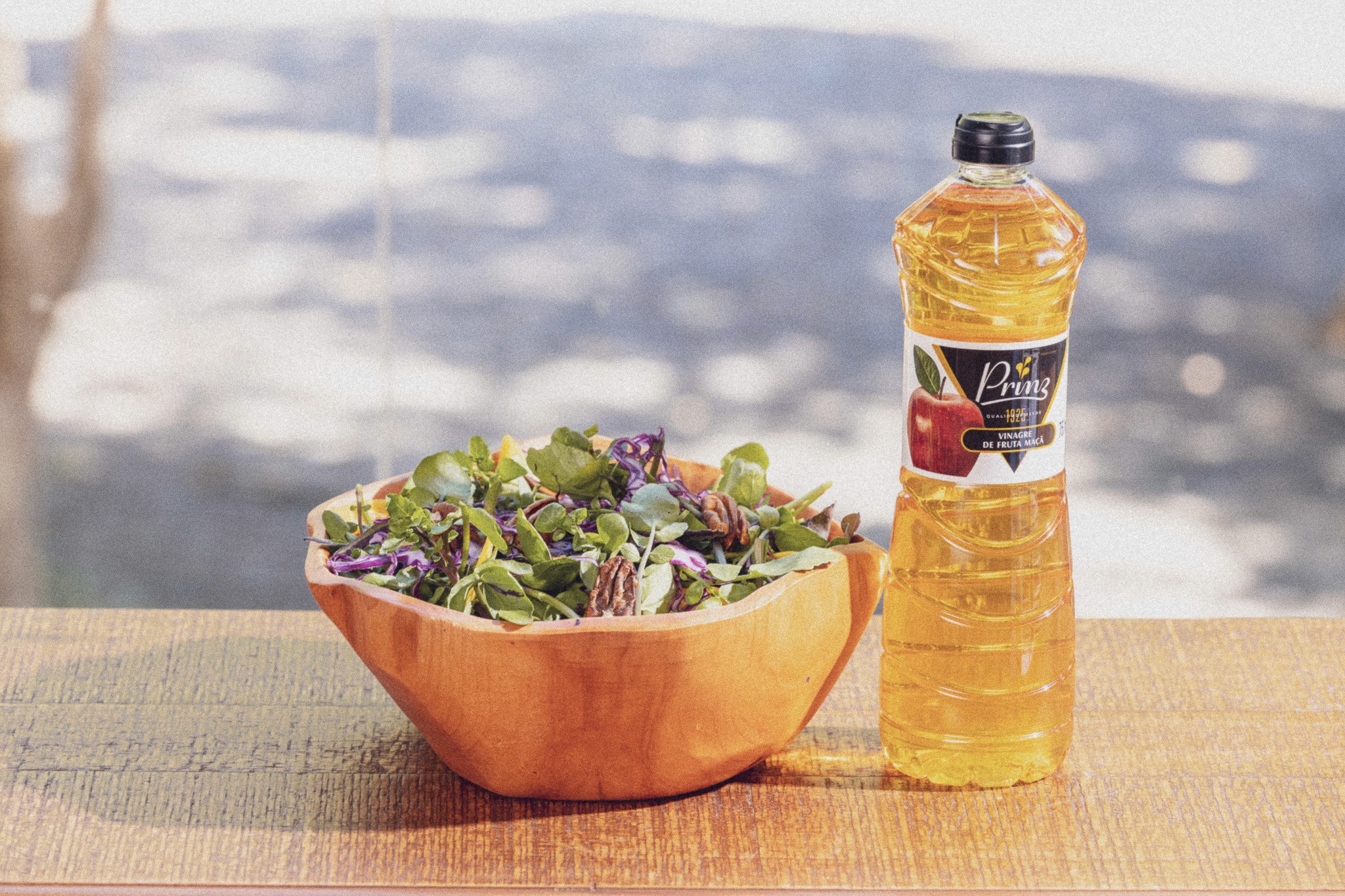
What defines the quality of apple cider vinegar
The final quality is deeply related to production variables that impact the flavor, stability, and consistency of the product. See in detail:
Raw material quality
The raw material is the starting point and defines the maximum potential of the vinegar. Apples with a higher sugar content favor more efficient fermentation, as they offer an adequate substrate for the yeast to act during the alcoholic stage. When the fruit displays good integrity, proper ripening, and a low level of contamination, the process tends to occur in a more stable and predictable manner.
On the other hand, the use of unripe, deteriorated, or excessively handled fruits can compromise fermentation, resulting in the formation of undesirable compounds, acidity imbalance, and loss of sensory quality. The apple variety itself also interferes with the final profile, since different cultivars present distinct proportions of sugars, acids, and aromatic compounds, which directly reflects in the flavor of the vinegar.
Microbiological control of fermentations
Vinegar is a fermented product, and this means that its quality depends on the balance between the microorganisms involved in the process. In the first stage, yeasts convert sugars into alcohol. Next, acetic bacteria transform this alcohol into acetic acid, responsible for the characteristic acidity of vinegar.
The microbiological control ensures that these transformations occur in a controlled manner, preventing the proliferation of undesired microorganisms. Factors such as temperature, oxygen availability, and culture management are decisive in this balance. When this control is well-conducted, the result is a more stable vinegar with a consistent sensory profile. On the contrary, unregulated fermentations can generate unpleasant aromas, irregular acidity, and even compromise the safety of the product.
Maturation time
After fermentation, vinegar does not immediately reach its best point. The maturation period is responsible for refining the sensory profile, allowing the acidity to integrate in a more balanced way into the product as a whole.
During this phase, more aggressive volatile compounds tend to soften, while the aroma and flavor gain greater complexity. Vinegars with a longer maturation time present a rounder and less incisive acidity, as well as greater sensory depth. In contrast, faster processes tend to result in more direct products, with less complexity and a greater perception of sharp acidity.
Level of intervention (filtration, standardization, and stabilization)
The level of intervention defines the degree of control over the final product. Filtration removes suspended particles and contributes to a clearer and more uniform appearance. Standardization adjusts parameters such as acidity and flavor profile, ensuring that different batches present similar characteristics. Finally, stabilization acts on conservation, extending shelf life and reducing variations over time.
When the level of intervention is higher, the result tends to be a more predictable, stable, and uniform vinegar, suitable for applications where consistency is essential. However, products with less intervention preserve a greater amount of natural compounds and display greater sensory complexity, although they may vary more between batches and present a less uniform appearance.
These variables do not act in isolation. The quality of the raw material establishes the initial potential of the product, the microbiological control ensures that this potential is developed correctly, the maturation time adjusts and refines the sensory profile, and the level of intervention defines the balance between naturalness and standardization.
It is the interaction between these factors that determines whether the apple cider vinegar will be just functional or if it will present a superior level of technical and sensory quality.
What is the flavor and aroma profile of Apple Cider Vinegar?
Apple Cider Vinegar occupies an intermediate position within the sensory spectrum of vinegars, being recognized for its greater complexity and balance.
Unlike more aggressive vinegars, such as white vinegar, or more intense ones, such as wine vinegar, apple cider vinegar presents a more integrated sensory structure, which combines acidity, light sweetness, and subtle aromatic notes.
Among the main attributes, the following stand out:
Moderate and rounder acidity, with less immediate impact on the palate;
Slight residual sweetness, coming from the fruit, which softens the acid perception;
Delicate and less volatile aroma, avoiding excessive interference in preparations;
Fruity and slightly fermented notes, which add depth to the flavor.
This combination allows for more precise control of acidity in recipes, making Apple Cider Vinegar especially useful in preparations where balance is key. In technical terms, it is an ingredient that acts as a flavor modulator, adjusting acidity without compromising the identity of the other components of the dish.

How to use Apple Cider Vinegar in daily life
The versatility of Apple Cider Vinegar is one of the main factors explaining its growing presence in the dietary routine. Its application goes beyond basic use in salads, extending to different stages of culinary preparation, acting as a technical element capable of adjusting, balancing, and transforming the final result of dishes.
Thanks to the more balanced sensory profile, with less aggressive acidity and slight residual sweetness, Apple Cider Vinegar allows precise interventions in flavor, which significantly expands its possibilities of use both in simple preparations and in more elaborate compositions.
Last but not least, the product has also been gaining attention from the wellness market, which values the characteristics of acetic acid. It is responsible for helping to reduce the glycemic index of meals, improving the body's insulin response. Not surprisingly, the famous "vinegar shot" has been widely spread as a health practice.
Learn more about the uses of Apple Cider Vinegar:
Flavor construction
Apple Cider Vinegar acts as a flavor modulator, being especially efficient in the final stage of preparation. In already finished dishes, small amounts can correct imbalances, bringing more freshness and reducing the feeling of heaviness, especially in fattier recipes.
In the finishing of roasted vegetables, for example, Apple Cider Vinegar helps highlight the natural caramelized sugars, creating contrast and depth. In denser sauces or those with higher fat content, its acidity contributes to balancing the overall dish, preventing the flavor from becoming excessively heavy.
This type of application is common in professional kitchens, where fine adjustment of acidity is used to give precision to the dish without masking the other ingredients.
Cold preparations
In cold preparations, Apple Cider Vinegar stands out for its ability to integrate flavors without overpowering the composition of the dish. In vinaigrettes, its gentler acidity allows for a better handling of the relationship between fat and acidity, especially if combined with fresh herbs and olive oils.
In salad dressings with a citrus base, it works as a complementary element, expanding complexity without making the result excessively acidic. In light marinades for vegetables, Apple Cider Vinegar contributes to slightly modifying the texture and highlighting the natural flavor of the ingredients, without altering their character.
This type of application is especially relevant in preparations that require freshness, lightness, and sensory balance.
Hot preparations
When used in hot preparations, Apple Cider Vinegar takes on a more structural role in flavor development. By deglazing the pan when preparing meats and vegetables, it helps incorporate the caramelized residues into the sauce, increasing the complexity of the dish.
It can also be used as a base for reductions and sauces, where its acidity concentrates and integrates with other ingredients, creating denser layers of flavor. In preparations such as chutneys and preserves, it acts in the balance between sweetness and acidity, in addition to contributing to the conservation and stability of the product.
This use highlights the role of vinegar as a complement and active component in constructing the profile of the dish.
Versatility in the kitchen
Few ingredients can move as naturally between different levels of culinary complexity as Apple Cider Vinegar.
In the home kitchen, it acts as a helper because it:
Simplifies preparations;
Corrects flavors;
Expands possibilities with few ingredients;
In professional kitchens, it is used as a technical tool by ensuring:
Construction of flavor layers;
Balance between fat, acidity, and sweetness;
Development of sauces and reductions.
Chefs use the product precisely for its ability to add acidity without overloading the dish, allowing greater precision in the final result.
In addition, its presence in different versions further expands its applicability, catering to everything from simple preparations to more elaborate gastronomic compositions.
Preservation and fermentation
Historically, vinegar has always been associated with food preservation, and Apple Cider Vinegar keeps this function efficiently. Its acidity creates an unfavorable environment for the development of undesirable microorganisms, extending the shelf life of foods.
In pickles and homemade preserves, it works both as a preserving agent and as a flavor element, allowing the creation of more complex profiles when combined with spices and herbs. It can also be used in the preservation of fruits and vegetables, maintaining texture and sensory characteristics for longer.
In addition, Apple Cider Vinegar can be integrated into fermentation processes, functioning as an acidifying base that contributes to control the microbiological environment.
Drinks and diluted consumption
The use of Apple Cider Vinegar in drinks has been gaining ground, especially in preparations seeking freshness and lightness. In general, the recommended dilution varies between 5% and 10% of vinegar in the drink, which is practically equivalent to about 1 to 2 tablespoons for a 200 ml glass of water, and can be adjusted according to preference.
When diluted, it can be combined with fruits, spices, and other ingredients, creating drinks with a slightly acidic and refreshing profile. Mixtures with lemon, ginger, or honey are common, as they balance the acidity and make consumption more pleasant.
In cold preparations, it can be used as a base for flavored drinks, while in simpler versions it can be incorporated into water as a practical way of consumption.
Respecting the dilution is essential to maintain sensory balance and avoid discomfort, since the acidity of vinegar, when concentrated, can be aggressive.
The wide range of use of Apple Cider Vinegar allows it to be progressively incorporated into the routine, functioning both as a technical ingredient and as a tool for fine-tuning flavor.
Can Apple Cider Vinegar be consumed for functional purposes?
As we mentioned, the functional consumption of Apple Cider Vinegar gained relevance in recent years, mainly in content related to well-being. However, this use must be guided by clear criteria. The product contains compounds such as acetic acid and polyphenols, which have been studied for possible effects in the body, such as glycemic modulation and antioxidant action.
For safe consumption, some points are essential:
Always dilute before consuming;
Avoid excess consumption;
Do not use as a food substitute;
Respect individual tolerances.
It is common to use small amounts diluted in water, especially before meals. But it is always important to consult a specialist before use.
When used properly, Apple Cider Vinegar can be safely incorporated into the dietary routine, but like any acidic ingredient, its consumption requires some basic care. Ingesting it without dilution or in excessive quantities can cause discomfort, such as gastric irritation, digestive sensitivity, or impact on tooth enamel over time.
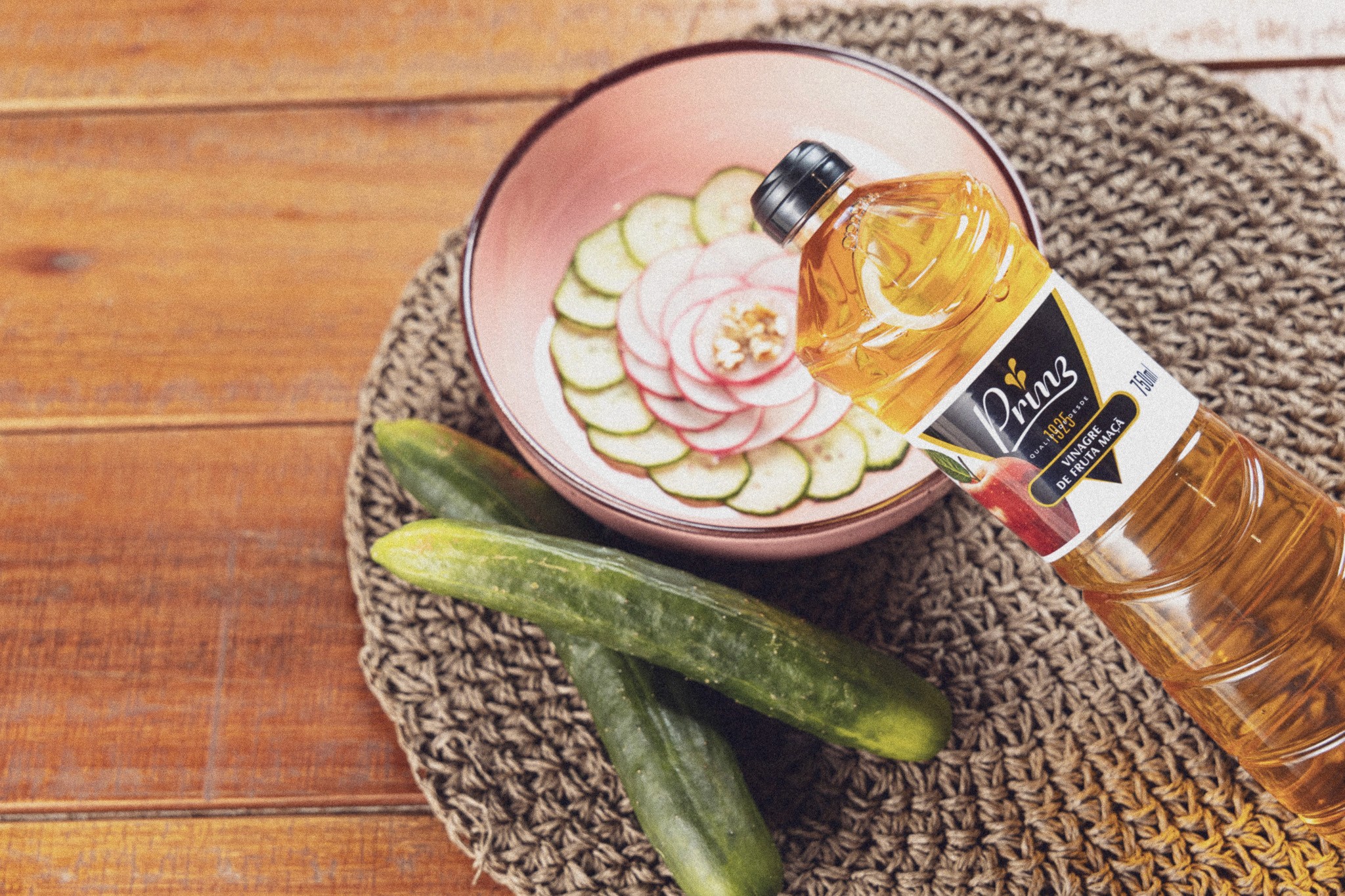
The use must be complementary and always associated with a balanced dietary routine.
What are the differences between the types of Apple Cider Vinegar?
Although they have the same production base, the different versions of Apple Cider Vinegar vary significantly depending on the level of intervention in the process, the origin of the raw material, and the control applied to the final product. These differences directly impact the stability, sensory profile, and predictability of use.
The appropriate choice is not only related to personal preference but to the type of application, the desired level of control in preparation, and the expected sensory experience in the final result.
Technical comparison between versions
The differences between the versions are not necessarily in the degree of processing, but in the origin of the raw material and in the formulation choices adopted in each line. See:
Criterion | Traditional | Organic | Preservative-free |
Raw material | Apples from conventional cultivation, with industrial quality control | Apples cultivated without synthetic inputs, according to organic certification | Can use conventional or organic apples |
Processing | Controlled process, with filtration, standardization, and stabilization to ensure consistency | Process with natural fermentation and technical control, respecting organic production standards | Controlled process, but without adding preservatives at the end |
Appearance | Clear, transparent, and uniform | May present slight visual variation, maintaining a controlled standard | No relevant difference compared to traditional (usually clear) |
Flavor Profile | Stable, direct, and standardized | Slightly more expressive, with greater proximity to the raw material | Similar to traditional, with small variations depending on the batch |
Aroma | Discreet and consistent | More present, with fruit notes | No significant difference compared to traditional |
Stability | High physical-chemical stability and long shelf life | High stability, respecting certification limits | High stability, without the use of added preservatives |
Standardization | High, with low variation between batches | Moderate, with minor natural variations allowed | High, close to traditional standard |
Sensory Control | High control, ideal for technical applications | Balance between control and raw material characteristics | High control, focusing on a cleaner formulation |
Main Applications | Sauces, emulsions, salads, and preparations that require consistency | Direct consumption, natural recipes, and preparations with appeal of origin | General culinary use, with preference for formulations without additives |
Usage Indication | When predictability and repeatability are key | When the organic origin of the raw material is a relevant criterion | When seeking a product with no added preservatives |
Note: In Prinz's portfolio, both the organic and the preservative-free vinegar do not use preservative additives. The core difference lies in the origin of the raw material and the positioning of the product, not necessarily in the level of process intervention.
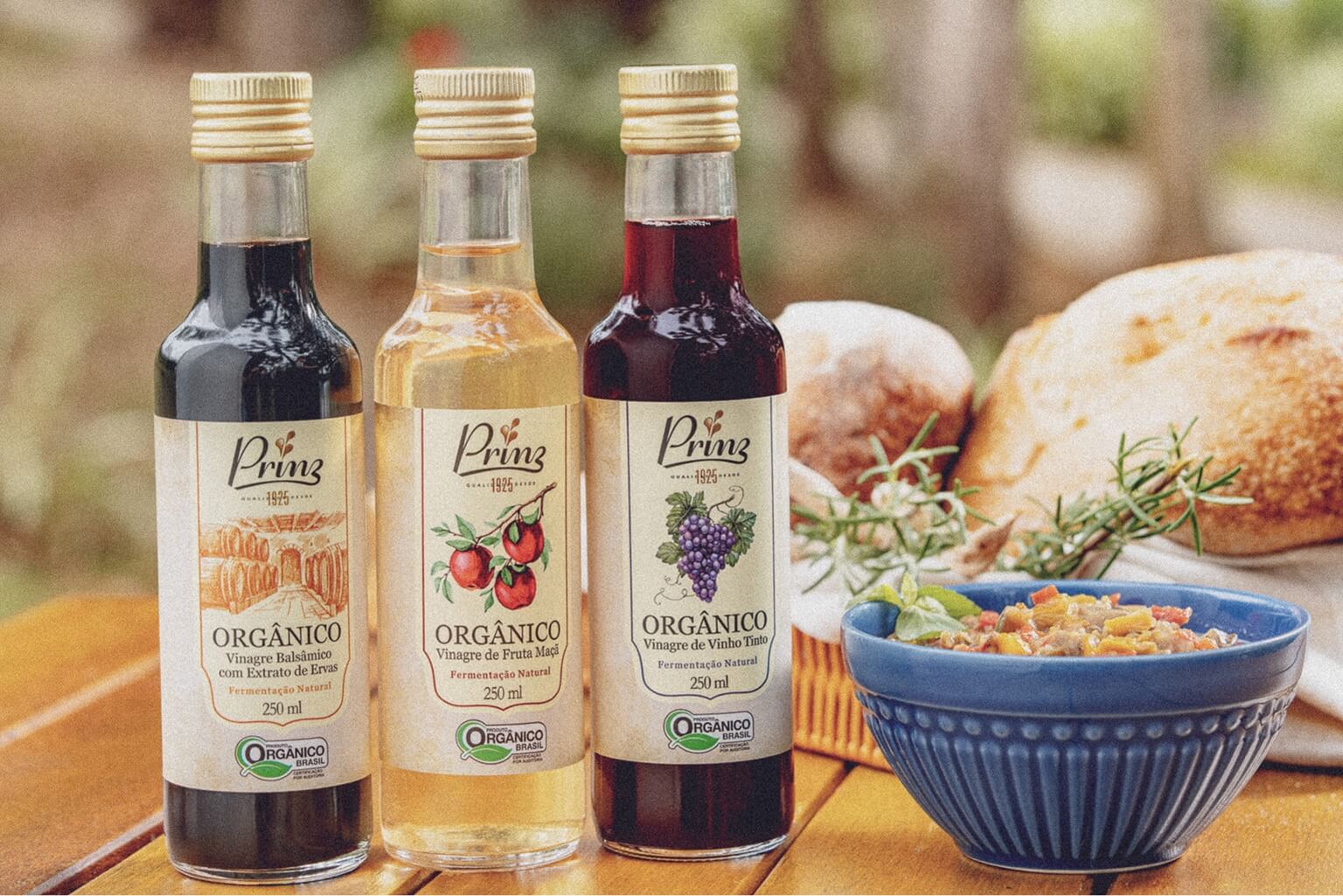
To make your choice easier
The traditional Apple Cider Vinegar is best suited for situations where consistency is fundamental, especially in recurring or large-scale preparations, where small variations can compromise the result.
The organic version is positioned as a middle ground, preserving more natural characteristics without giving up a certain level of control, being suitable for those who value origin and less intervention in the product.
On the other hand, the preservative-free Apple Cider Vinegar meets a proposal closer to artisanal, with greater sensory complexity and less standardization, which makes it especially interesting in creative preparations, fermentations, and applications where variation is part of the experience.
Why Apple Cider Vinegar became so popular
The rise of Apple Cider Vinegar is not linked to a single factor, but to the convergence of cultural, dietary, and digital changes that transformed people's relationship with food.
Over time, vinegar has always had a practical function in food, whether as a preservative or acidulant. Its recent repositioning, however, is linked to the advancement of topics such as less processed foods, greater control over ingredients, and the search for more balanced routines.
Faced with this scenario, the product gains the spotlight because it fits naturally into these demands. Its association with more balanced eating habits comes from its recurring use in routines that prioritize simplicity and functionality, shifting from being just a seasoning to acting as a dietary supplement.
The ease of use also drives its adoption. It can be incorporated without complexity at different times of the routine, from meal preparation to diluted consumption, which reduces barriers and expands its use.
Finally, the perception of naturalness exerts a strong influence. Being a fermented product, it is frequently associated with simpler and less industrialized food.
The combination of these factors consolidated Apple Cider Vinegar as a recurring ingredient in contemporary eating, expanding its role beyond occasional use.
The place of Apple Cider Vinegar in today's diet
Apple Cider Vinegar combines characteristics that justify its growing relevance in contemporary food. Its fermentation base, combined with the presence of bioactive compounds and a balanced sensory profile, makes it an ingredient capable of moving between different contexts with consistency.
More than following trends, understanding its properties, limitations, and ways of use is what allows exploring its full potential in a conscious manner.
When well used, Apple Cider Vinegar stops being a complementary ingredient and starts acting as a decisive element in constructing flavor, organizing the dietary routine, and expanding possibilities within the kitchen.
Want to include Apple Cider Vinegar in your routine with more safety and versatility? Discover the options available in our portfolio and choose the most suitable version for your daily life.